

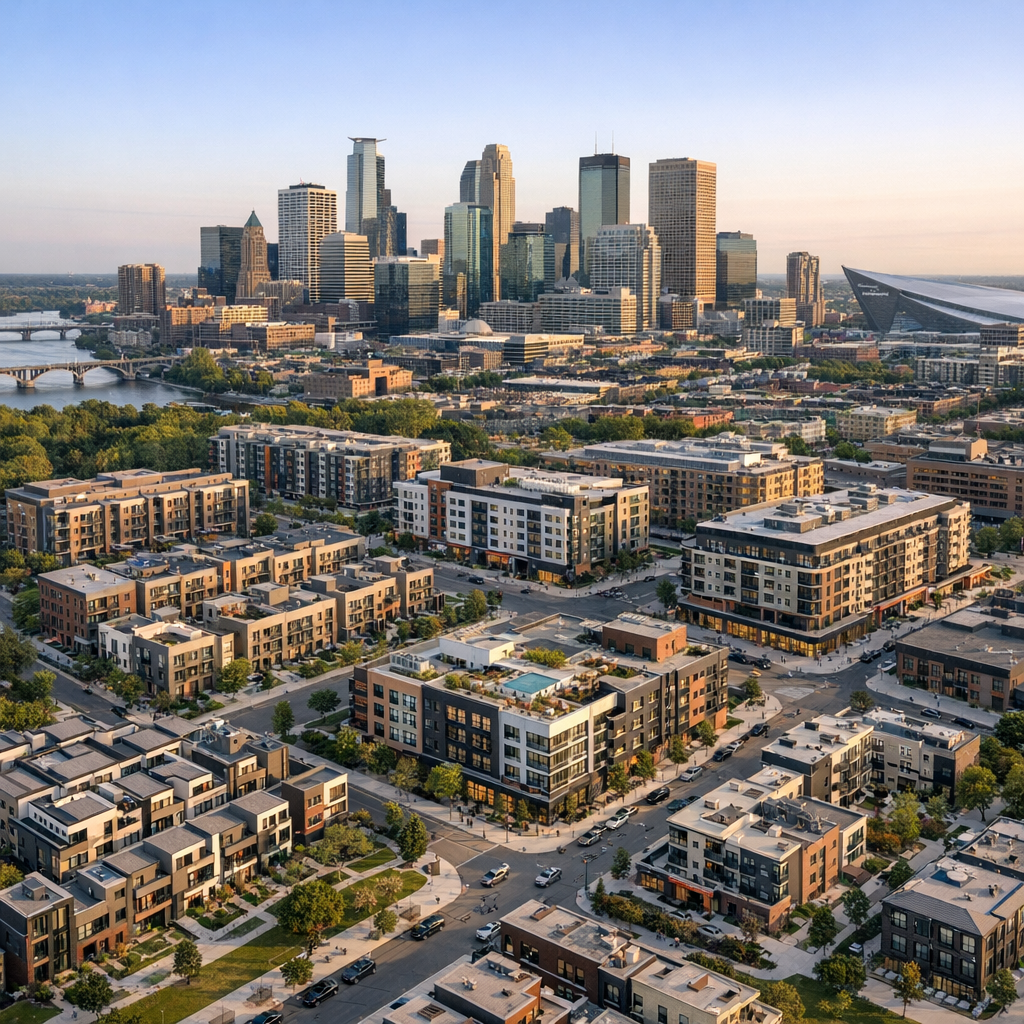
Minneapolis’ housing market is experiencing notable shifts, characterized by stable home prices, increased inventory, and significant development projects that are reshaping the city’s real estate landscape.
Market Trends
As of March 2026, the median sale price for homes in Minneapolis stood at $355,000, marking a 6.0% increase from the previous year. Homes are selling faster, with an average of 30 days on the market, down from 32 days last year. However, the number of homes sold decreased to 315 in March, compared to 362 in the same month last year. This suggests a competitive market with rising prices and quicker sales, yet a slight dip in overall transactions. Source
Inventory levels have risen, providing buyers with more options. In April 2026, active listings reached 855 homes, an 18.8% increase year-over-year, significantly outpacing the national growth rate of 4.6%. New listings also surged, with 688 homes entering the market, compared to a national growth of just 1.1%. This influx of inventory offers buyers a broader selection, though demand remains strong, keeping the market competitive. Source
Notable Developments
Several significant projects are contributing to the transformation of Minneapolis’ housing landscape:
Wadaag Commons
Located in the Seward neighborhood, Wadaag Commons is a newly completed affordable housing development featuring 39 spacious three- and four-bedroom units. Designed with sustainability in mind, the project includes a brick exterior and rooftop solar readiness, reflecting a commitment to quality construction and community investment. Source
Allura
Allura is a modern mixed-use development in North Minneapolis, blending 14 affordable and 24 luxury units to create an inclusive community. The project offers smart amenities such as a tech-enabled laundromat, a chef-led ghost kitchen, and a rooftop garden, aiming to meet daily needs and fuel local ownership. Source
Minneapolis Grain Exchange Redevelopment
The historic Minneapolis Grain Exchange is set for a substantial redevelopment led by Sherman Associates. The proposed $123 million project plans to transform the site into a mixed-use development that includes 232 new apartments, aligning with city leaders’ goals of revitalizing the downtown area. Source
Conclusion
Minneapolis’ housing market is characterized by stable prices, increased inventory, and significant development projects that are reshaping the city’s real estate landscape. These trends offer both challenges and opportunities for buyers, sellers, and investors navigating the evolving market.