

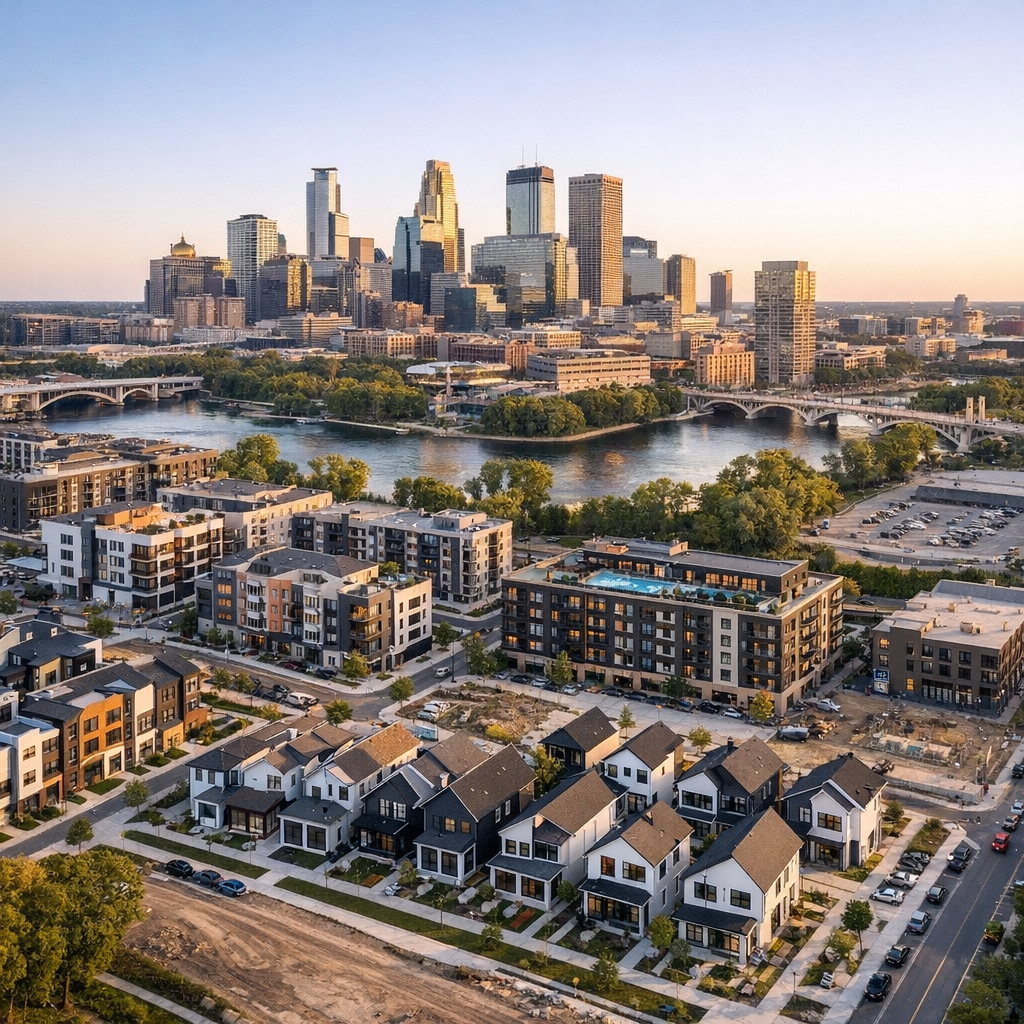
Minneapolis’ real estate market is experiencing notable shifts, influenced by various factors including inventory changes, pricing trends, and significant development projects.
Market Trends and Housing Dynamics
As of March 2026, the median sale price for homes in Minneapolis reached $355,000, marking a 6% increase from the previous year. Homes are selling faster, averaging 30 days on the market compared to 32 days last year. However, the number of homes sold decreased to 315 from 362 in the same period, indicating a tightening market. Source
In April 2026, active listings rose to 855 homes, an 18.8% year-over-year increase, significantly outpacing the national growth rate of 4.6%. New listings also surged, with 688 homes entering the market, compared to a national growth of just 1.1%. This influx provides buyers with more options, though sellers may face increased competition. Source
Significant Development Projects
Several key developments are reshaping Minneapolis’ housing landscape:
Spring Manor Redevelopment
Spring Manor is undergoing the largest public housing redevelopment in the city’s history. The project includes a four-story addition, rehabilitating 221 units across two existing buildings, and adding 15 new, fully accessible units. This initiative aims to provide quality low-income housing and is a significant investment in the community. Source
Minneapolis Grain Exchange Transformation
The historic Minneapolis Grain Exchange is set for a substantial redevelopment led by Sherman Associates. The $123 million project plans to transform the site into a mixed-use development, adding 232 new apartments. This renovation aligns with city leaders’ goals of revitalizing the downtown area. Source
Wadaag Commons
Wadaag Commons is a newly completed affordable housing development in the Seward neighborhood. The project features 39 spacious three- and four-bedroom units designed with longevity and sustainability in mind, including a brick exterior and rooftop solar readiness. This development reflects a commitment to quality construction and thoughtful community investment. Source
Conclusion
Minneapolis’ real estate market is characterized by rising home prices, increased inventory, and significant development projects aimed at enhancing housing options. These trends offer both challenges and opportunities for buyers, sellers, and investors navigating the evolving landscape.