
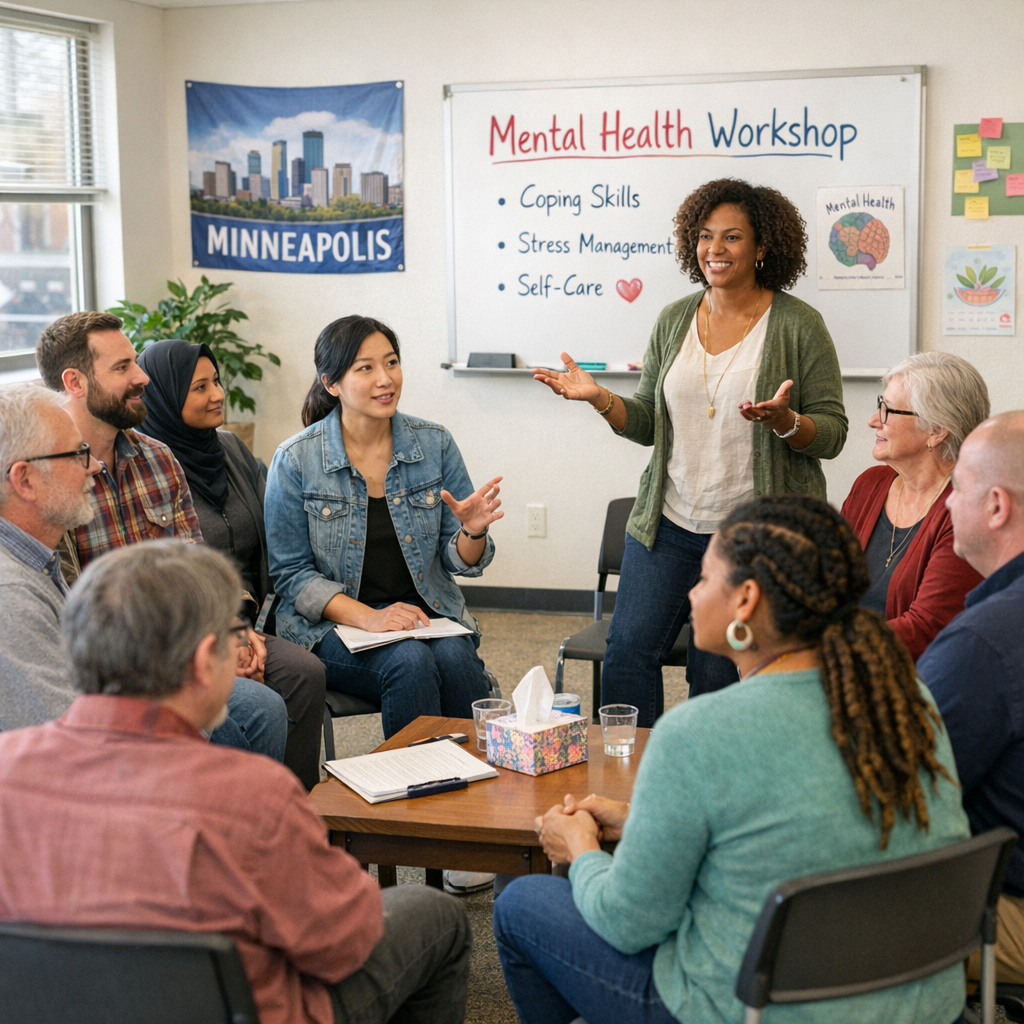
Mental health is a vital component of overall well-being, influencing how we think, feel, and interact daily. In Minneapolis, a variety of resources and strategies are available to support mental health for individuals and families.
Local Mental Health Resources
The City of Minneapolis offers comprehensive mental health support. Residents can access crisis and support services, resources for caregivers, young people, and those affected by domestic violence. For immediate assistance, individuals can call or text 988, a 24/7 helpline providing support for those in need. Translation services are available for phone calls, ensuring accessibility for non-English speakers. More information can be found on the city’s official website. ([minneapolismn.gov](https://www.minneapolismn.gov/government/departments/health/current-concerns/mental-health/?utm_source=openai))
For culturally specific mental health services, the city provides a list of providers serving diverse communities, including Black, Indigenous, people of color, and LGBTQ+ individuals. This ensures that all residents have access to care that respects and understands their unique cultural backgrounds. ([minneapolismn.gov](https://www.minneapolismn.gov/government/departments/health/current-concerns/mental-health/culturally-specific-resources/?utm_source=openai))
Strategies to Boost Mental Well-being
In addition to professional support, there are several strategies individuals can adopt to enhance their mental health:
- Stay Connected: Regularly communicate with loved ones to build a support network.
- Seek Professional Help: Consider counseling or therapy to address specific concerns.
- Prioritize Sleep: Ensure adequate rest to support cognitive and emotional functions.
- Maintain a Balanced Diet: Nutritious meals can positively impact mood and energy levels.
- Engage in Physical Activity: Regular exercise releases endorphins, which can improve mood.
- Practice Mindfulness: Techniques like deep breathing or meditation can reduce stress.
- Participate in Enjoyable Activities: Hobbies and leisure activities can provide a sense of fulfillment.
- Journal Regularly: Writing down thoughts and feelings can offer clarity and relief.
- Volunteer: Helping others can boost self-esteem and provide a sense of purpose.
- Learn Something New: Engaging in new skills or hobbies can stimulate the mind and provide a sense of accomplishment.
Implementing these practices can contribute to improved mental well-being and resilience. ([minneapolismn.gov](https://www.minneapolismn.gov/government/departments/health/current-concerns/mental-health/?utm_source=openai))
Community Support Centers
Minneapolis hosts several centers dedicated to mental health support. For instance, Tasks Unlimited offers drop-in and resource center services at two locations in the city. These centers provide one-on-one coordination and peer support services, assisting individuals in connecting with necessary resources for successful mental health recovery. Services include benefits navigation, employment assistance, housing support, counseling, and more. ([tasksunlimited.org](https://www.tasksunlimited.org/drop-in-center-services/?utm_source=openai))
By utilizing these resources and strategies, residents of Minneapolis can take proactive steps toward enhancing their mental well-being and fostering a healthier community.