

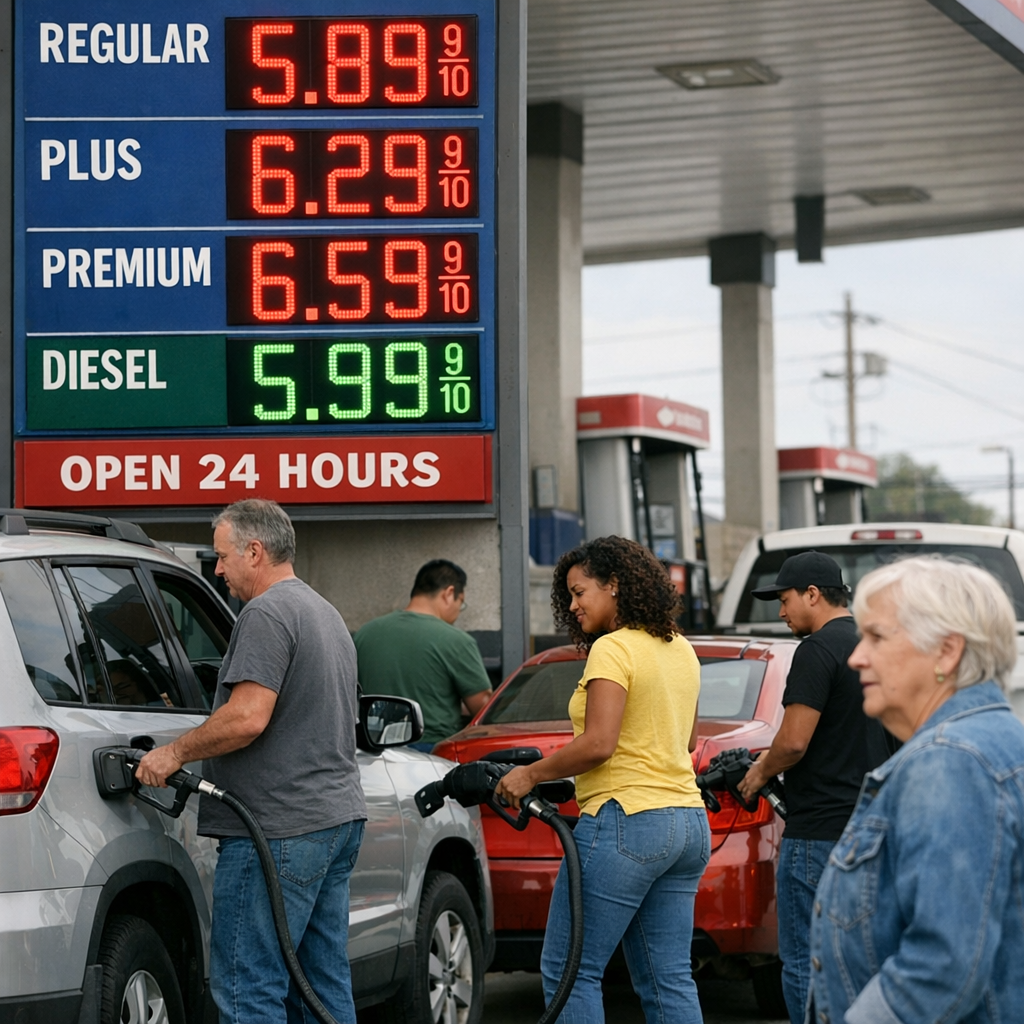
As the United States grapples with economic challenges, rising inflation and escalating energy costs have become central concerns for many Americans. Recent data indicates a significant increase in consumer prices, with inflation reaching 3.8% in April, the highest in three years. This surge is largely attributed to the ongoing military conflict with Iran, which began in February and led to the closure of the Strait of Hormuz, a critical passage for global oil shipments. Consequently, national average gas prices have soared above $4.50 per gallon, with some states experiencing prices exceeding $5.
The economic strain is palpable. A CBS News/YouGov poll conducted from May 13-15 among 2,064 adults revealed that 70% of Americans feel “angry” or “frustrated” about the current economic situation. Only 11% expressed enthusiasm, and 19% reported satisfaction. Notably, 65% of respondents believe that current policies are exacerbating the economy in the short term, and 50% fear long-term harm. Additionally, 77% stated that their incomes are not keeping pace with rising prices.
In response to these challenges, the International Monetary Fund (IMF) has projected a “buoyant” U.S. economy poised for accelerated growth and lower unemployment this year. However, the IMF also warns of risks associated with rising federal budget debts, which “represent a growing stability risk.” The organization emphasizes the need for balanced fiscal policies to mitigate potential economic instability.
As policymakers and citizens navigate this complex economic landscape, the focus remains on implementing strategies that address inflationary pressures and energy costs while ensuring long-term financial stability for all Americans.