

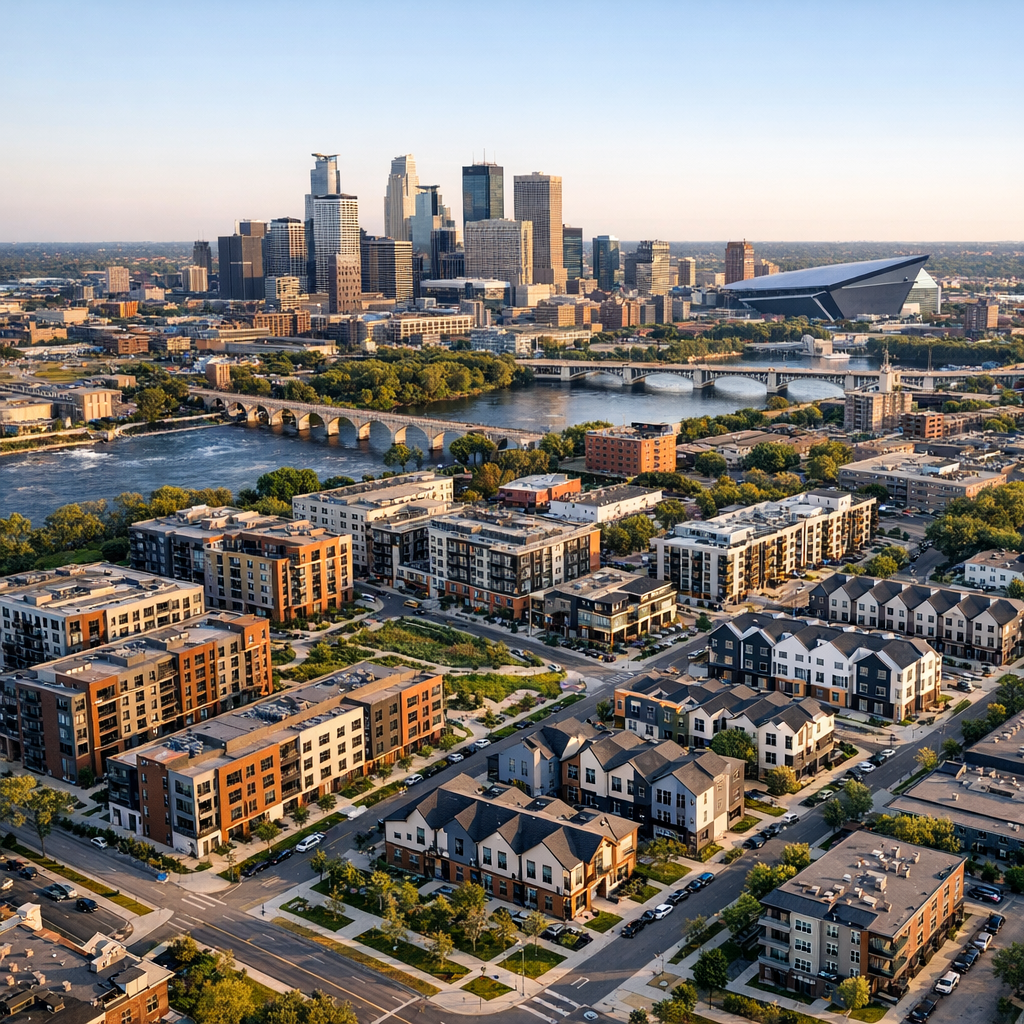
Minneapolis’ housing market is experiencing notable shifts, with trends indicating increased inventory, stable prices, and significant development projects reshaping the city’s landscape.
Market Trends
Recent data reveals a substantial rise in housing inventory. In April, active listings climbed to 855 homes, marking an 18.8% year-over-year increase, nearly quadrupling the national growth rate of 4.6%. New listings also surged, with 688 homes entering the market, compared to a modest 1.1% growth nationally. This influx provides buyers with more options and intensifies competition among sellers. Source
Despite the increased inventory, home prices have remained relatively stable. The median sale price in March was $380,000, unchanged from the previous year. This stability suggests a balanced market where supply and demand are aligning. Source
Notable Developments
Several significant projects are contributing to the city’s evolving real estate landscape:
Historic Redevelopment
The Minneapolis Grain Exchange is set for a substantial redevelopment led by Sherman Associates. The $123 million project aims to transform the historic site into a mixed-use development featuring 232 new apartments, aligning with city leaders’ goals of revitalizing downtown areas. Source
Affordable Housing Initiatives
Projects like the Allura development in North Minneapolis are blending affordable and luxury units to create inclusive communities. Allura offers 14 affordable and 24 luxury units, along with amenities such as a tech-enabled laundromat and a chef-led ghost kitchen, aiming to meet daily needs and fuel local ownership. Source
Climate-Resilient Housing
Developers like Footprint are focusing on carbon-smart, climate-resilient multifamily housing in walkable, transit-rich neighborhoods. Their Solstice Apartments in Northeast Minneapolis exemplify this approach, featuring Passive House certified units with significant reductions in construction and operating emissions. Source
Conclusion
Minneapolis’ housing market is characterized by increased inventory, stable prices, and dynamic development projects. These trends offer opportunities for buyers seeking diverse options and for developers committed to creating inclusive, sustainable communities.