

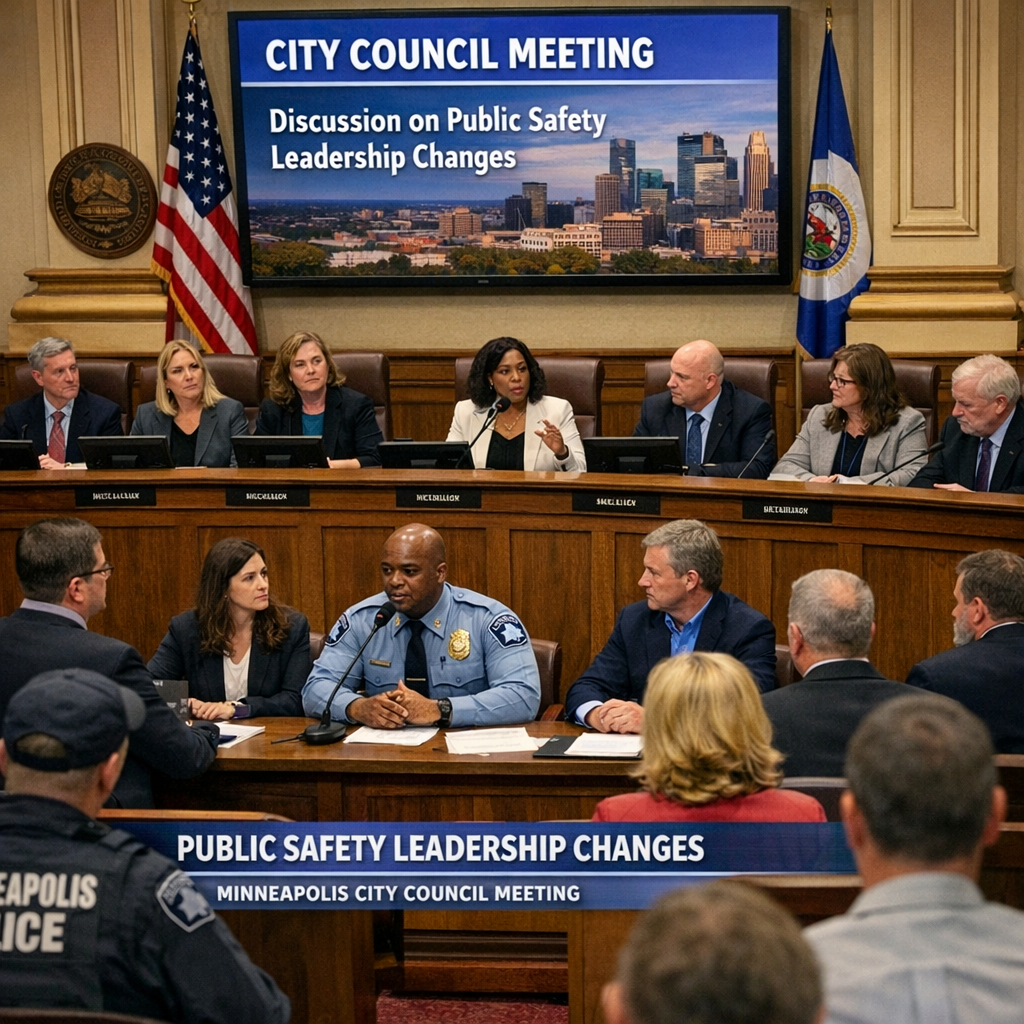
Minneapolis is currently navigating a period of significant change within its public safety leadership, prompting discussions about the city’s approach to community safety and police reform.
Leadership Transitions
In April, the Minneapolis City Council voted 7-6 to reject Todd Barnette for a second term as the city’s top public safety official. This decision may lead to the city seeking its third community safety commissioner within just four years of establishing the role, which oversees all emergency response, including both the police department and non-police alternatives. The rejection raises uncertainty about Police Chief Brian O’Hara, who reports to Barnette and requires council approval to remain past August. Mayor Jacob Frey strongly criticized the decision, suggesting it was driven by political maneuvering and pledged to veto the council’s vote. Some council members argued Barnette was disengaged and failed to control department budgets or implement safety initiatives. However, others, like Council Member Jamison Whiting, noted wider frustrations with the role rather than with Barnette himself. Despite the vote, Barnette expressed a desire to continue serving in the position, citing his commitment to the city.
Shortly after, Police Chief Brian O’Hara resigned following findings from an external investigation that he interfered with an internal probe into allegations regarding his workplace conduct. Mayor Jacob Frey stated in a reprimand letter that the investigation substantiated O’Hara’s inappropriate behavior, which demonstrated poor judgment and undermined the integrity required for the role. The inquiry, initiated in 2025, examined reports of O’Hara’s alleged inappropriate relationship with a city employee. Frey told O’Hara he could face disciplinary actions, prompting his resignation. O’Hara, appointed in 2022 for his experience with police reform in Newark, stepped down amid ongoing court-ordered reforms in the Minneapolis Police Department. His departure adds to instability in the city’s public safety leadership, especially as Community Safety Commissioner Todd Barnette faces uncertain council support for continuation in his role. O’Hara had already struggled to secure City Council backing for a new term, and Council President Elliott Payne criticized Mayor Frey’s decision to renominate him despite the pending investigations. Frey affirmed continued support for Barnette and suggested that Assistant Chief Blackwell is ready to step up.
Community Impact
These leadership changes come at a time when the city is addressing the aftermath of Operation Metro Surge, a federal immigration enforcement initiative that had significant economic and social impacts on Minneapolis residents. The operation resulted in an estimated $203.1 million in community and economic impact, including losses to workers, businesses, food and housing stability, and mental health services. Approximately 76,000 people—mostly immigrants, refugees, American Indian/Native American, and Black/African American and People of Color—currently need urgent assistance. The assessment identifies four priority areas of urgent need: livelihoods, shelter, food security, and mental health. In addition to community harm, Operation Metro Surge has strained City resources. The City has spent more than $6 million on payroll, police overtime, and operational expenses. Officials estimate total costs could have doubled if the surge continued. The City is recovering and requesting significant funding assistance to address urgent humanitarian needs. Minneapolis remains committed to supporting impacted families and businesses, upholding its separation ordinance, maintaining transparency and community updates, and advancing recovery efforts across priority sectors.
Looking Ahead
As Minneapolis works to stabilize its public safety leadership, community members and city officials alike are emphasizing the importance of transparent and effective governance. The city’s commitment to addressing the needs of its diverse population remains a focal point in ongoing discussions about public safety and community well-being.