

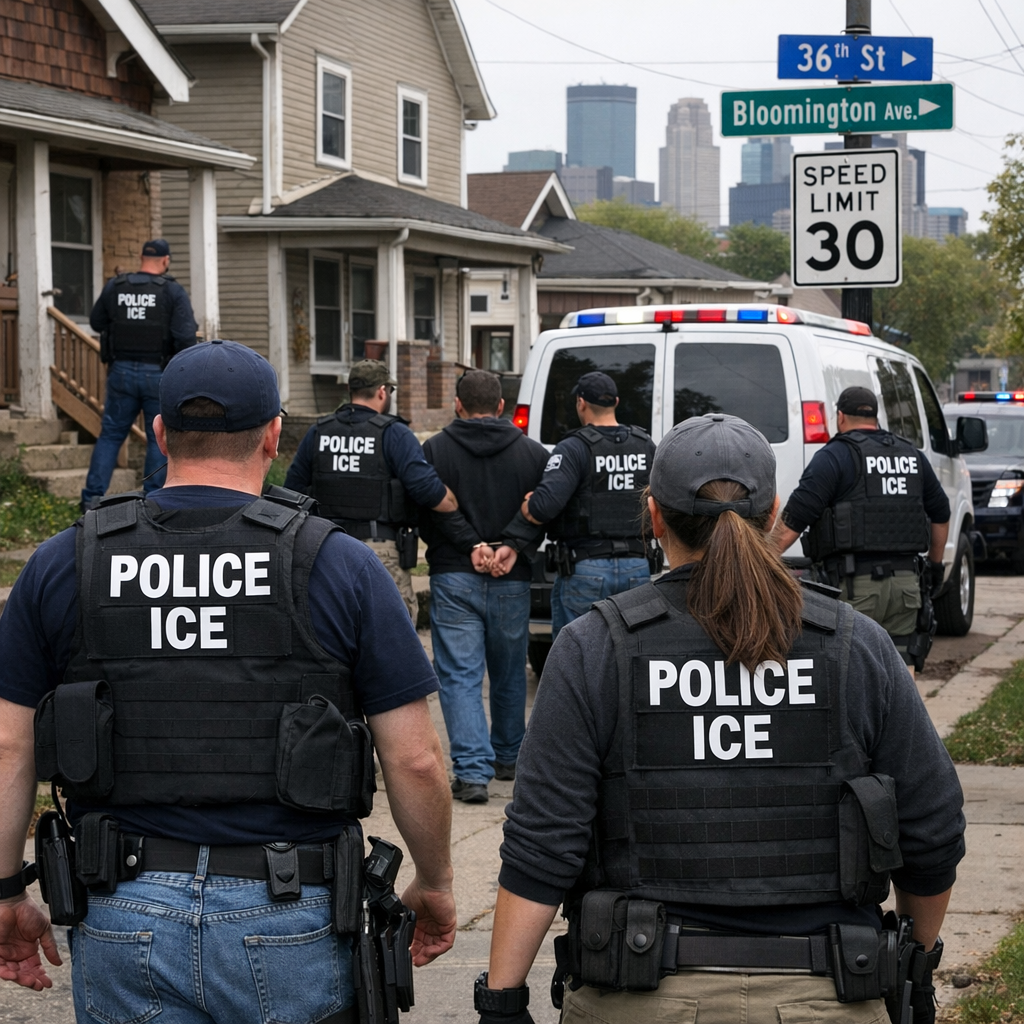
In recent months, Minneapolis has faced substantial challenges due to federal immigration enforcement activities, notably Operation Metro Surge. This initiative, involving up to 3,000 federal agents, has had profound effects on the city’s economy and community well-being.
Economic Impact
City officials estimate that Operation Metro Surge resulted in at least $203.1 million in economic impact. Local businesses and restaurants reported losses of approximately $81 million, while workers, apprehensive about leaving their homes, forfeited around $47 million in wages. Additionally, hotels experienced $4.7 million in revenue losses due to cancellations extending through the summer. These figures underscore the operation’s extensive reach into the city’s economic fabric. Source
Community and Social Effects
The operation’s repercussions extended beyond financial losses. Approximately 76,200 residents faced food insecurity, and 8,713 school-aged children required food services. Mental health service providers reported a 50% reduction in client contact, indicating heightened community distress. The presence of federal agents also led to widespread fear, with many residents, regardless of immigration status, hesitant to engage in daily activities. Source
Political and Legal Considerations
The deployment has sparked political debates and legal challenges. Local leaders have expressed concerns about the operation’s alignment with community values and its long-term implications. Discussions are ongoing regarding the balance between federal enforcement and local autonomy, emphasizing the need for policies that consider both national security and community well-being. Source
Moving Forward
As Minneapolis navigates the aftermath of Operation Metro Surge, city officials are focusing on recovery efforts. This includes seeking federal assistance to address urgent humanitarian needs and implementing strategies to rebuild trust within the community. The situation highlights the importance of collaborative approaches that respect local contexts while addressing national concerns.
Understanding the full impact of such federal actions is crucial for developing policies that safeguard both national interests and the well-being of local communities. Minneapolis’s experience serves as a case study in the complex interplay between federal initiatives and local realities.