

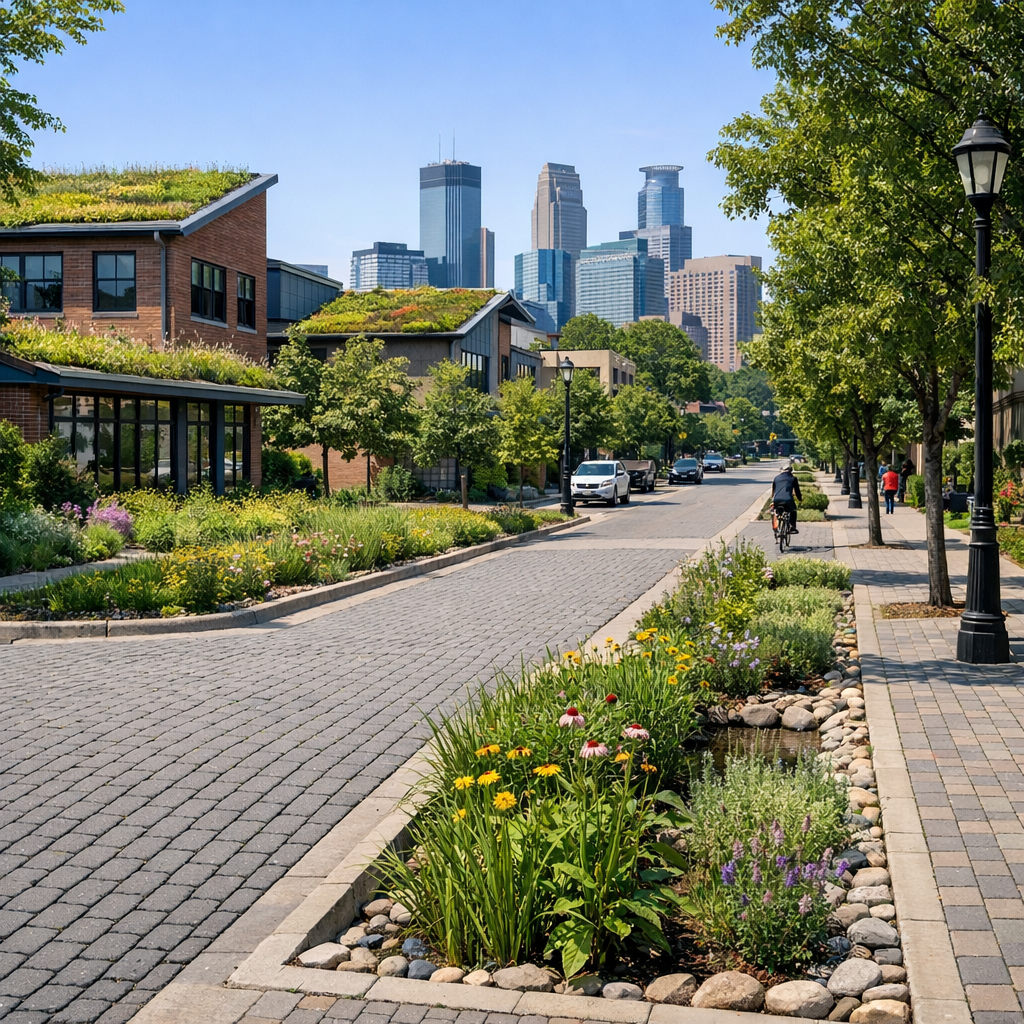
Urban heat islands (UHIs) occur when urban areas experience higher temperatures than their rural surroundings due to human activities and infrastructure. In Minneapolis, efforts are underway to address this phenomenon through various initiatives.
Green Infrastructure Projects
The City of Minneapolis has been actively implementing green infrastructure to manage stormwater and increase green spaces. These projects include:
- Planting more trees to expand the urban canopy.
- Installing green roofs and permeable pavements to reduce heat absorption.
- Developing sustainable landscaping practices to enhance community spaces.
These efforts aim to improve air and water quality, create local habitats, and enhance community experiences. Learn more about the city’s green infrastructure initiatives.
Climate Equity Plan
In July 2023, the Minneapolis City Council unanimously passed the Climate Equity Plan, setting ambitious goals to:
- Significantly reduce climate pollution by 2030.
- Achieve carbon neutrality by 2050.
This plan emphasizes environmental justice by prioritizing diverse residents, organizations, and businesses, especially in Green Zones. It focuses on reducing utility bills, increasing green jobs, and creating a healthier, more prosperous future for all. Read more about the Climate Equity Plan.
Climate Legacy Initiative
To fund the Climate Equity Plan, the Climate Legacy Initiative (CLI) was launched in January 2024. This initiative allocates $10 million annually to support projects such as:
- Weatherizing homes to improve energy efficiency.
- Reducing utility bills for residents.
- Promoting green job training programs.
- Planting more trees to expand the urban canopy.
The CLI represents a significant investment in equitable climate action, tripling the city’s previous funding levels. Discover more about the Climate Legacy Initiative.
Community Engagement and Research
Understanding the distribution of heat within the city is crucial for effective intervention. In July 2024, over 200 volunteer community scientists participated in a study to map urban heat islands in Hennepin and Ramsey counties. Using heat sensors mounted on vehicles, they collected data to identify areas most affected by extreme heat. This information guides the city’s strategies in mitigating heat impacts and enhancing community resilience. Learn more about the urban heat island mapping project.
Through these comprehensive efforts, Minneapolis is taking proactive steps to combat urban heat islands, promote environmental justice, and build a sustainable future for all residents.