
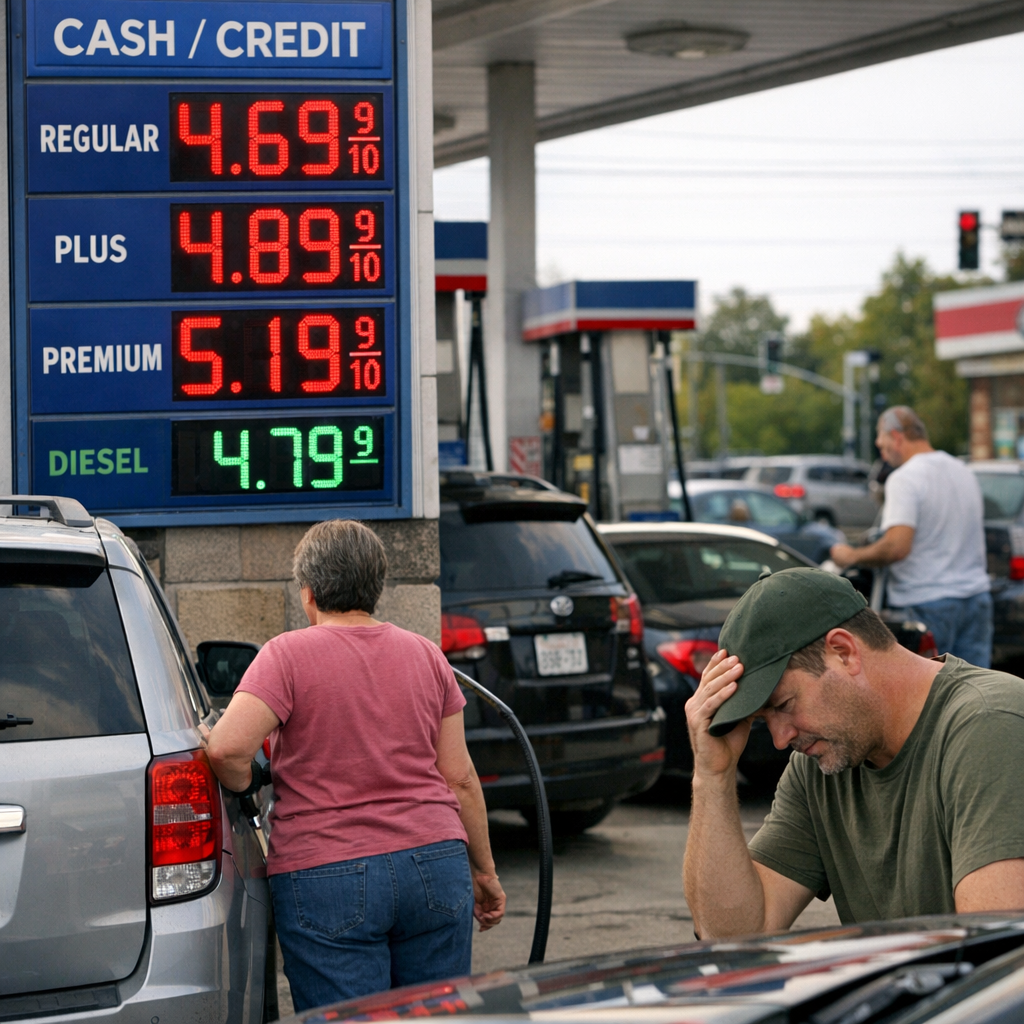
As the United States grapples with economic challenges, many Americans are expressing concern over rising inflation and escalating energy costs. Recent data indicates that inflation surged to 3.8% in April, marking its highest level in three years. This uptick is largely attributed to the ongoing military conflict with Iran, which has disrupted global oil supplies and led to a significant increase in gas prices, now averaging over $4.50 per gallon nationally. Some states are even witnessing prices exceeding $5 per gallon.
The economic strain is palpable among consumers. A recent CBS News/YouGov poll revealed that 70% of Americans feel “angry” or “frustrated” about the current administration’s handling of the economy. Only 11% expressed enthusiasm, and 19% reported satisfaction. This growing dissatisfaction underscores the financial pressures many households are experiencing, as wages struggle to keep pace with rising prices.
In response to these challenges, the administration has proposed measures such as a gas tax holiday to alleviate the burden on consumers. However, this proposal has encountered resistance from key lawmakers who are concerned about the potential impact on federal funding for infrastructure projects. The debate highlights the complexities involved in addressing economic issues that affect both the national economy and local communities.
For residents of Minneapolis, these national economic trends have tangible local implications. The combination of higher fuel costs and inflation can strain household budgets, affecting everything from commuting expenses to the price of goods and services. As policymakers continue to navigate these challenges, it remains crucial for communities to stay informed and engaged in discussions that shape economic policies impacting their daily lives.