

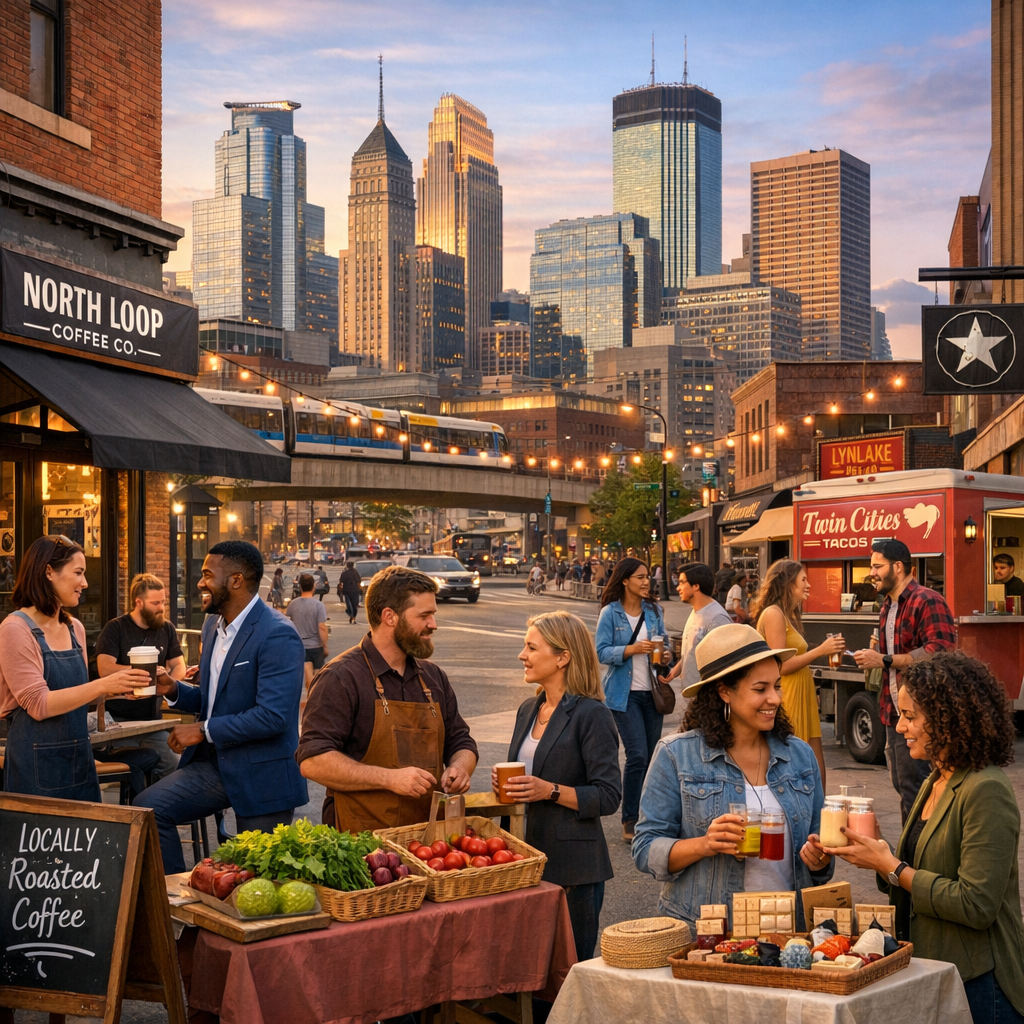
Minneapolis’ business environment is undergoing significant transformations, marked by both challenges and opportunities. Local entrepreneurs are demonstrating resilience and innovation, adapting to the evolving economic landscape.
Independent Retailers Revitalize Downtown
The Minneapolis skyway system, traditionally dominated by national chains, is experiencing a resurgence of independent retailers. Entrepreneurs like Keiona Cook have realized long-held dreams by opening businesses such as Lovely’s Sewing & Arts Collective in the IDS Center. This shift is part of a broader downtown retail transformation, with local businesses like Still Grind Coffee and Mother Dough Bakery filling previously vacant spaces, signaling a trend toward a more locally driven downtown economy.
Housing Market Challenges
The Twin Cities region is facing a growing housing shortage, with a significant drop in housing unit construction. In 2025, only 12,161 units were built, a sharp decline from the 18,000+ units constructed annually between 2019 and 2022. This lag in new housing development is contributing to increasing rents and home prices, threatening the region’s reputation for housing affordability.
Entrepreneurial Success Stories
Local entrepreneurs are making significant strides. For instance, Vanlice Lemonade, founded by Vee Washington in 2017, has expanded its distribution to nine Hy-Vee stores and various independent retailers and restaurants. This growth reflects the potential for local businesses to thrive despite economic challenges.
Economic Indicators
Recent data from the Bureau of Labor Statistics indicates a slight decrease in the unemployment rate in the Minneapolis-St. Paul-Bloomington area, from 4.8% in February 2026 to 4.5% in March 2026. This suggests a modest improvement in the local job market.
In conclusion, while Minneapolis faces economic challenges, the resilience and innovation of its local businesses, coupled with strategic initiatives, are paving the way for a dynamic and inclusive economic future.