

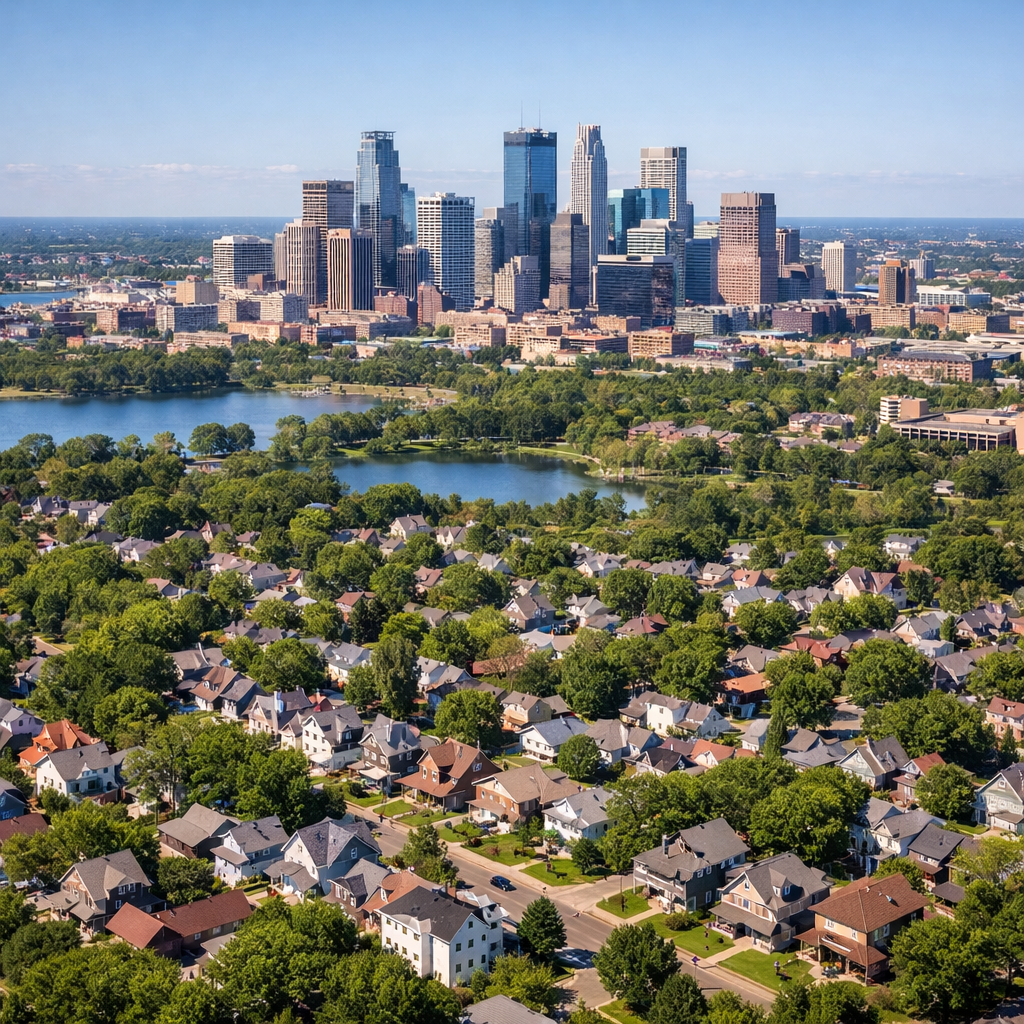
Minneapolis’ housing market is experiencing notable shifts, presenting both challenges and opportunities for buyers and sellers alike. Understanding these trends is essential for making informed decisions.
Market Trends
Recent data indicates a significant increase in housing inventory. In April 2026, active listings rose to 855 homes, marking an 18.8% year-over-year increase, substantially outpacing the national growth rate of 4.6%. This surge provides buyers with more options but introduces heightened competition for sellers. Concurrently, the median list price in Minneapolis decreased by 3.9% year-over-year to $309,950, offering more affordable opportunities for prospective buyers. Despite these changes, homes are selling swiftly, with a median of just 35 days on the market, underscoring sustained demand. Source
Development Projects
Several development initiatives are reshaping Minneapolis’ housing landscape. The historic Minneapolis Grain Exchange is slated for a $123 million transformation into a mixed-use development featuring 232 new apartments. This project aligns with city efforts to revitalize downtown areas. Source
In North Minneapolis, the Allura development is introducing a modern mixed-use community comprising 38 housing units, including both affordable and luxury options. Amenities such as a tech-enabled laundromat and a chef-led ghost kitchen aim to foster an inclusive and future-ready neighborhood. Source
Additionally, the relocation of Graco’s Northeast Minneapolis campus is opening up 40 acres of prime Mississippi Riverfront land for potential redevelopment, presenting a significant opportunity for new housing and community projects. Source
Conclusion
Minneapolis’ housing market is in a state of flux, characterized by increased inventory, price adjustments, and dynamic development projects. Staying informed about these trends is crucial for navigating the evolving real estate landscape in the city.