

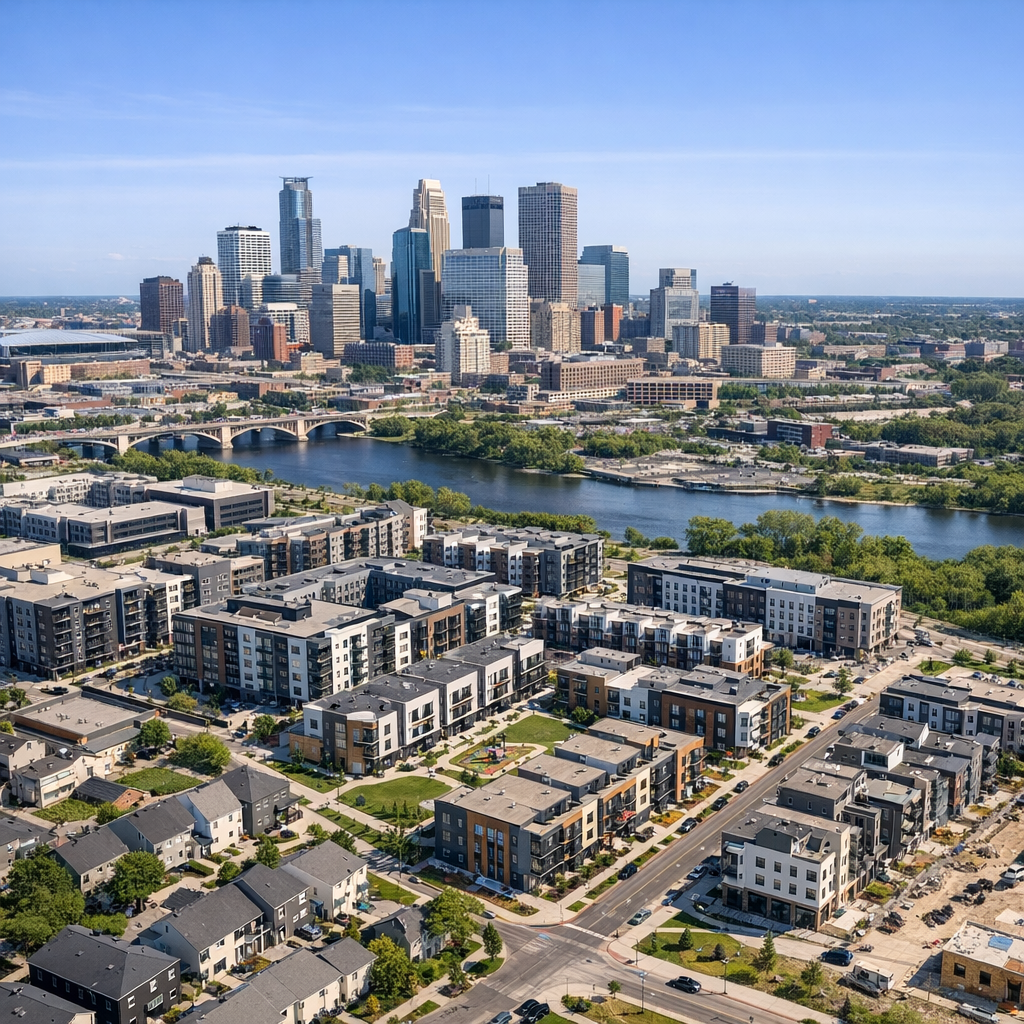
Minneapolis’ housing market is experiencing notable shifts, with trends indicating increased inventory, stable prices, and significant development projects reshaping the city’s landscape.
Market Trends: Inventory and Pricing
Recent data reveals a substantial increase in housing inventory. In April 2026, active listings rose to 855 homes, marking an 18.8% year-over-year increase, significantly outpacing the national growth rate of 4.6%. This surge provides prospective buyers with a broader selection of properties. Concurrently, the median list price in Minneapolis decreased by 3.9% year-over-year to $309,950, offering more affordable options compared to the national median of $425,000. Despite the increased inventory, homes are selling swiftly, with a median of just 35 days on the market, underscoring sustained buyer demand.
Notable Developments: Revitalizing the Urban Core
Several significant development projects are underway, contributing to the city’s evolving real estate landscape:
Minneapolis Grain Exchange Transformation
The historic Minneapolis Grain Exchange is set for a substantial redevelopment led by Sherman Associates. The $123 million project aims to convert the site into a mixed-use development featuring 232 new apartments, aligning with city initiatives to revitalize downtown areas.
Graco Site Redevelopment
Graco’s decision to relocate its Northeast Minneapolis campus opens up 40 acres of prime Mississippi Riverfront land for potential redevelopment. This site presents a significant opportunity for new housing and commercial projects, enhancing the city’s riverfront appeal.
Allura Mixed-Use Development
In North Minneapolis, the Allura project is introducing a modern mixed-use development that combines affordable and luxury housing units. The initiative includes smart amenities such as a tech-enabled laundromat and a chef-led ghost kitchen, aiming to foster an inclusive and future-ready community.
Conclusion
Minneapolis’ housing market is characterized by increased inventory, stable pricing, and dynamic development projects. These factors collectively contribute to a vibrant and evolving real estate environment, offering diverse opportunities for residents and investors alike.