

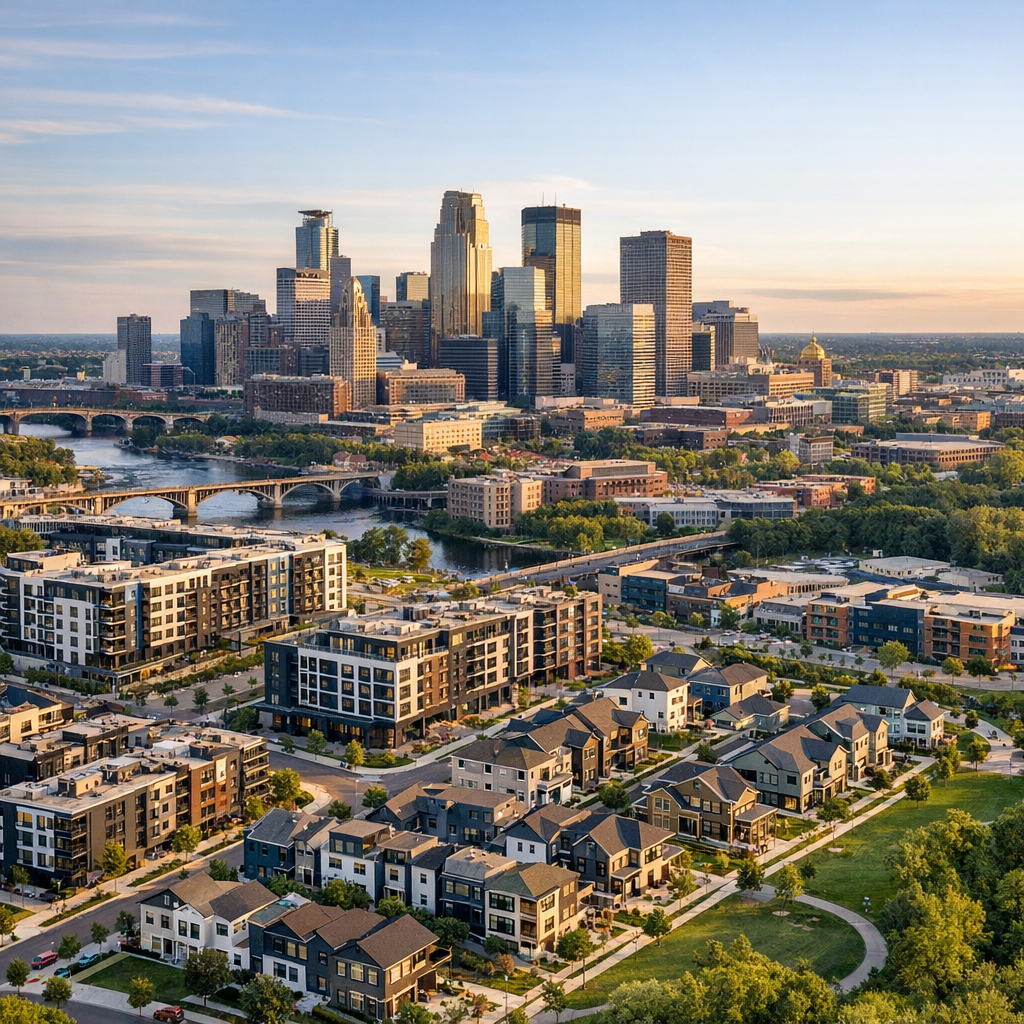
Minneapolis’ real estate market is experiencing significant changes, with notable shifts in housing prices, inventory levels, and development projects shaping the city’s landscape.
Housing Market Trends
Recent data indicates a dynamic housing market in Minneapolis. In March 2026, the median sale price of homes reached $355,000, marking a 6% increase from the previous year. Homes are selling faster, averaging 30 days on the market compared to 32 days last year. However, the number of homes sold decreased to 315 in March, down from 362 the previous year. Source
Inventory levels have also seen a significant uptick. Active listings rose by 18.8% year-over-year in April 2026, with 855 homes available on the market. This increase provides buyers with more options but also intensifies competition among sellers. Source
Development Projects
Several development projects are contributing to the city’s evolving real estate landscape:
Allura
Located in North Minneapolis, Allura is a mixed-use development comprising 38 housing units, including 14 affordable and 24 luxury units. The project features amenities such as a tech-enabled laundromat, a chef-led ghost kitchen, and a rooftop garden, aiming to create an inclusive and sustainable community. Source
Wadaag Commons
Wadaag Commons, situated in the Seward neighborhood, offers 39 affordable three- and four-bedroom units. Designed with sustainability in mind, the development includes a brick exterior and is rooftop solar-ready, reflecting a commitment to quality construction and community investment. Source
Minneapolis Grain Exchange Redevelopment
The historic Minneapolis Grain Exchange is slated for a significant overhaul. Plans include transforming the complex into a mixed-use development featuring 232 new apartments. This $123 million project aims to revitalize the downtown area and preserve the site’s historical significance. Source
Conclusion
As Minneapolis’ real estate market continues to evolve, staying informed about market trends and development projects is essential for residents and investors alike. The city’s commitment to sustainable and inclusive development, coupled with a dynamic housing market, presents both opportunities and challenges in navigating the real estate landscape.