

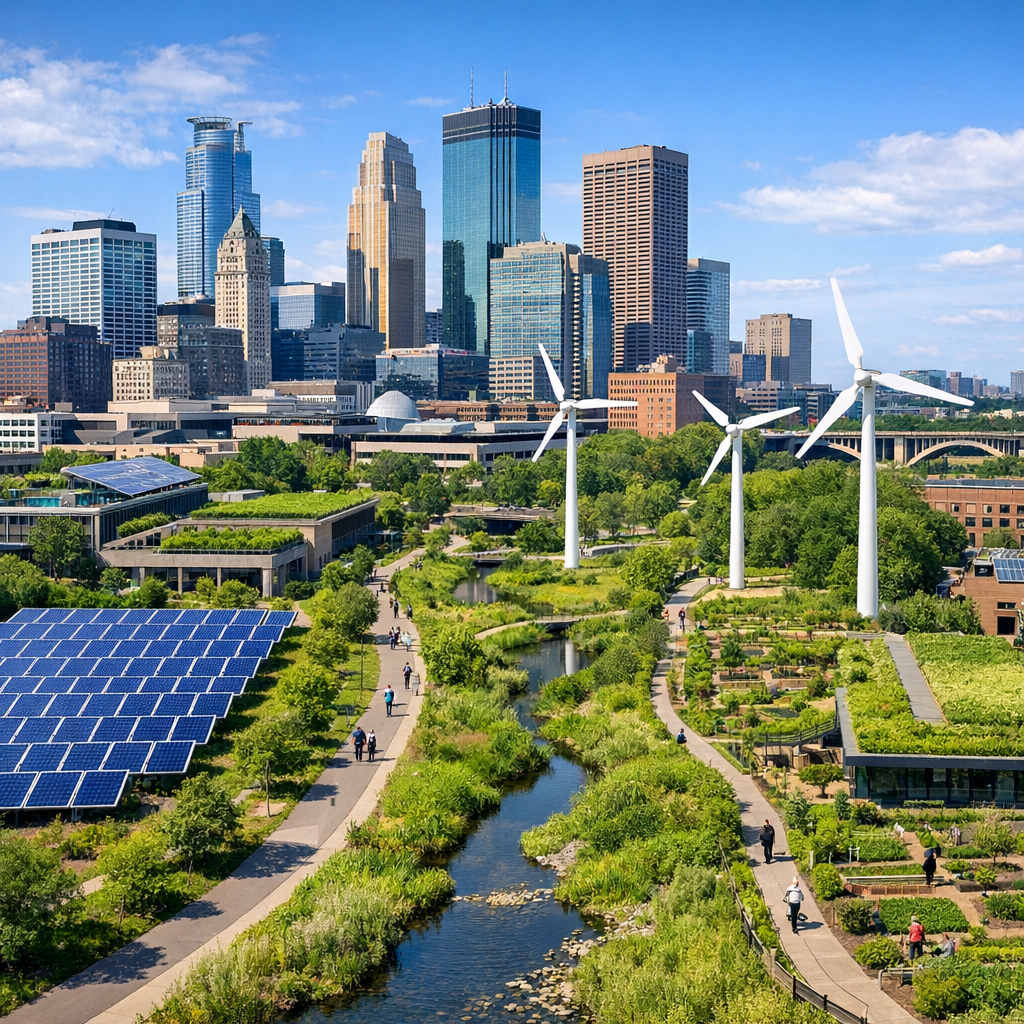
Minneapolis, known for its vibrant culture and picturesque lakes, is experiencing significant changes due to climate change. These shifts are impacting our environment, infrastructure, and daily lives.
Rising Temperatures and Altered Precipitation
Since 1970, Minneapolis has seen a temperature increase of approximately 4.4°F, with winter temperatures rising by 5.3°F. This warming trend contributes to more intense rainfall events, leading to increased stormwater runoff and potential flooding. Such conditions strain our stormwater infrastructure and affect water quality in our lakes and rivers. Source
Impacts on Public Health and Ecosystems
Warmer temperatures and altered precipitation patterns have led to longer allergy seasons and increased risks of heat-related illnesses. Additionally, our local ecosystems are under stress, with warmer waters affecting fish populations and other aquatic life. Source
City Initiatives for Climate Resilience
In response, Minneapolis has implemented several initiatives:
- Climate Equity Plan: Aims to significantly reduce climate pollution by 2030 and achieve carbon neutrality by 2050. This plan emphasizes environmental justice and community engagement. Source
- Climate Legacy Initiative: Launched in 2024, this initiative invests $10 million annually into climate action projects, focusing on communities most affected by climate change. Source
- Transportation Action Plan: Aims to reshape the transportation system to reduce greenhouse gas emissions, promoting transit, walking, and bicycling. Source
Community Involvement
Residents can contribute by participating in local sustainability programs, adopting energy-efficient practices, and staying informed about city initiatives. Together, we can build a more resilient Minneapolis.