

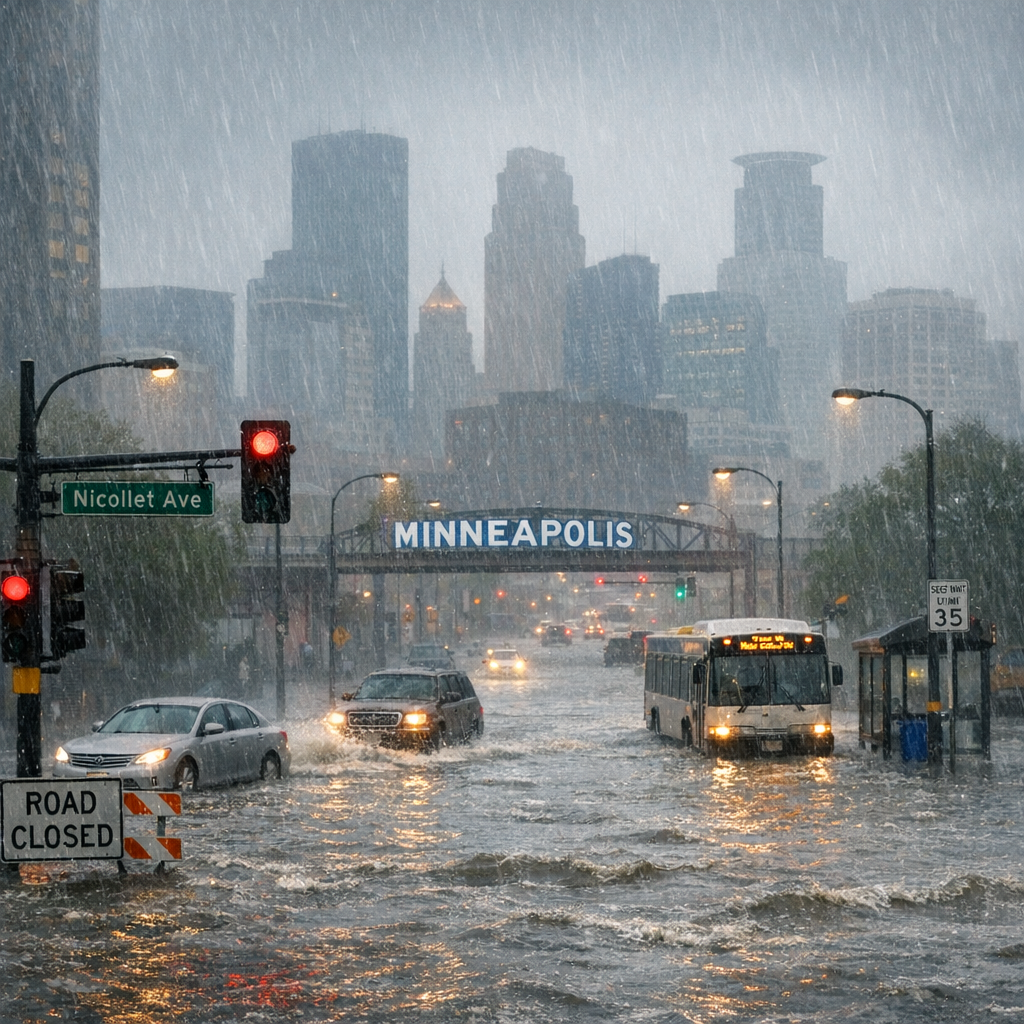
Minneapolis is experiencing significant changes due to climate change, with notable increases in temperature and precipitation. These shifts have profound effects on the city’s infrastructure, natural resources, and residents.
Rising Temperatures and Precipitation
Since 1970, Minneapolis has seen a substantial rise in winter temperatures, warming by over 5°F, more than twice the national average. This warming trend contributes to more intense rainfall events, earlier snowmelt, and increased frequency of extreme weather conditions. Such changes pose challenges to the city’s infrastructure and natural ecosystems. Source
Impacts on Infrastructure and Natural Resources
Increased precipitation leads to higher stormwater runoff, overwhelming existing drainage systems and causing urban flooding. This runoff carries pollutants into rivers and lakes, degrading water quality and harming aquatic life. Warmer temperatures also stress local flora and fauna, disrupting ecosystems and affecting biodiversity. Source
City’s Response and Adaptation Strategies
Recognizing these challenges, Minneapolis has implemented several initiatives to enhance climate resilience. The Climate Equity Plan, adopted in 2023, aims to significantly reduce greenhouse gas emissions by 2030 and achieve carbon neutrality by 2050. This plan emphasizes environmental justice, focusing on communities most vulnerable to climate impacts. Source
Additionally, the city is investing in green infrastructure, such as expanding tree canopies and improving stormwater management systems, to mitigate the effects of increased precipitation and urban heat islands. These efforts are part of a broader strategy to create a sustainable and resilient urban environment. Source
Community Involvement and Future Outlook
Community engagement is crucial in addressing climate change. Residents are encouraged to participate in local sustainability programs, adopt energy-efficient practices, and support policies aimed at reducing carbon emissions. Through collective action, Minneapolis can navigate the challenges posed by climate change and build a resilient future for all its inhabitants.