

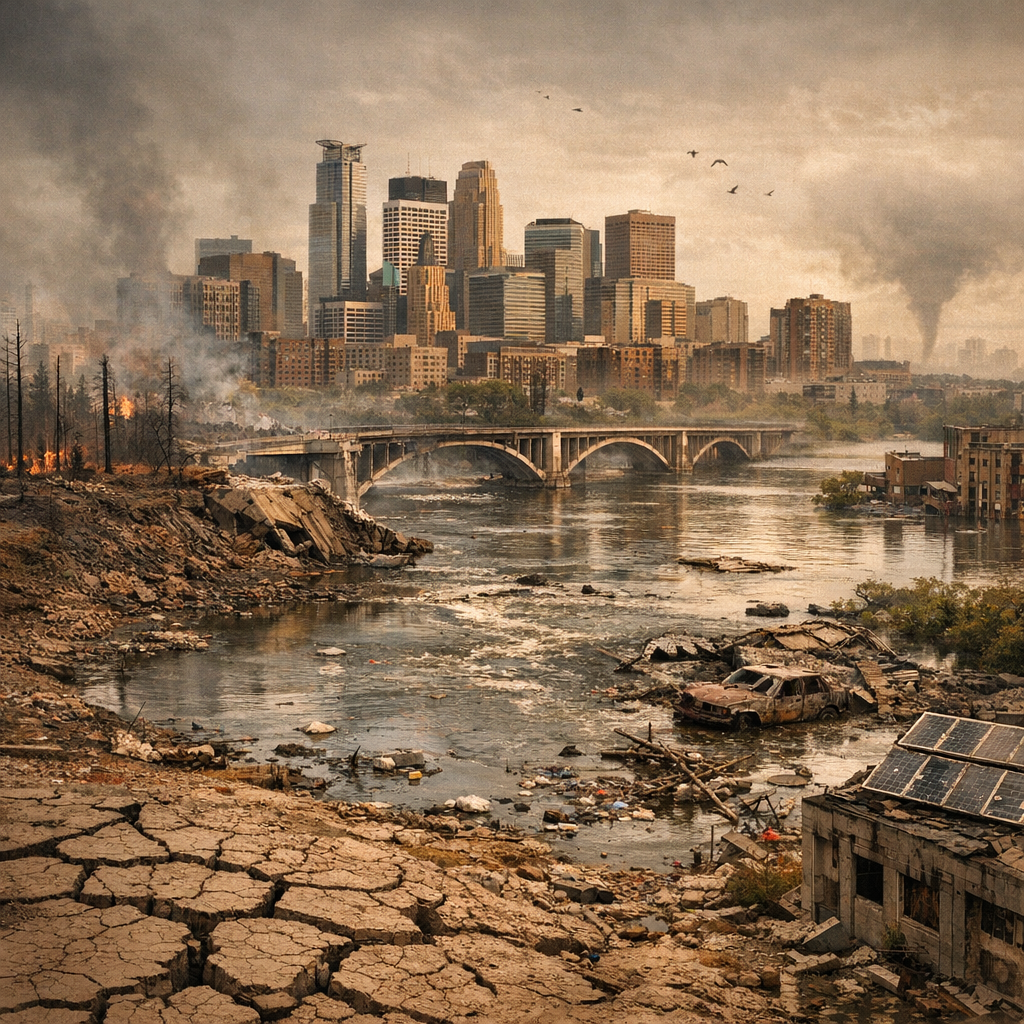
Climate change is no longer a distant concern; its effects are increasingly evident in Minneapolis. The city has experienced significant shifts in temperature and precipitation patterns, leading to various environmental and infrastructural challenges.
Rising Temperatures and Altered Precipitation
Since 1970, winter temperatures in Minneapolis have risen by approximately 5.3°F, more than twice the national average. This warming trend contributes to intensified rainfall, earlier snowmelt, and disrupted ecosystems. Additionally, the city faces an increased frequency of extreme heat events and unpredictable winter weather patterns. Source
Impacts on Water Systems
Increased precipitation and warmer winters pose challenges to water quality and urban infrastructure. Heavier rainfall leads to higher volumes of stormwater runoff, carrying pollutants into rivers and lakes. This results in larger algae blooms and decreased oxygen levels, threatening aquatic life. Moreover, the existing stormwater infrastructure may struggle to handle these increased volumes, raising the risk of urban flooding. Source
City Initiatives for Climate Resilience
Recognizing these challenges, Minneapolis has implemented several initiatives to enhance climate resilience:
- Climate Equity Plan: Adopted in 2023, this plan aims to significantly reduce climate pollution by 2030 and achieve carbon neutrality by 2050. It emphasizes reducing utility bills, increasing green jobs, and creating a healthier future for all residents. Source
- Climate Legacy Initiative: Launched in 2024, this initiative allocates resources to projects in communities most affected by climate change, focusing on equitable solutions. Source
- Transportation Action Plan: Aims to reshape the transportation system to address climate change by reducing greenhouse gas emissions through improved transit options and electrification of fleets. Source
These efforts reflect Minneapolis’s commitment to building a sustainable and resilient community in the face of climate change.