

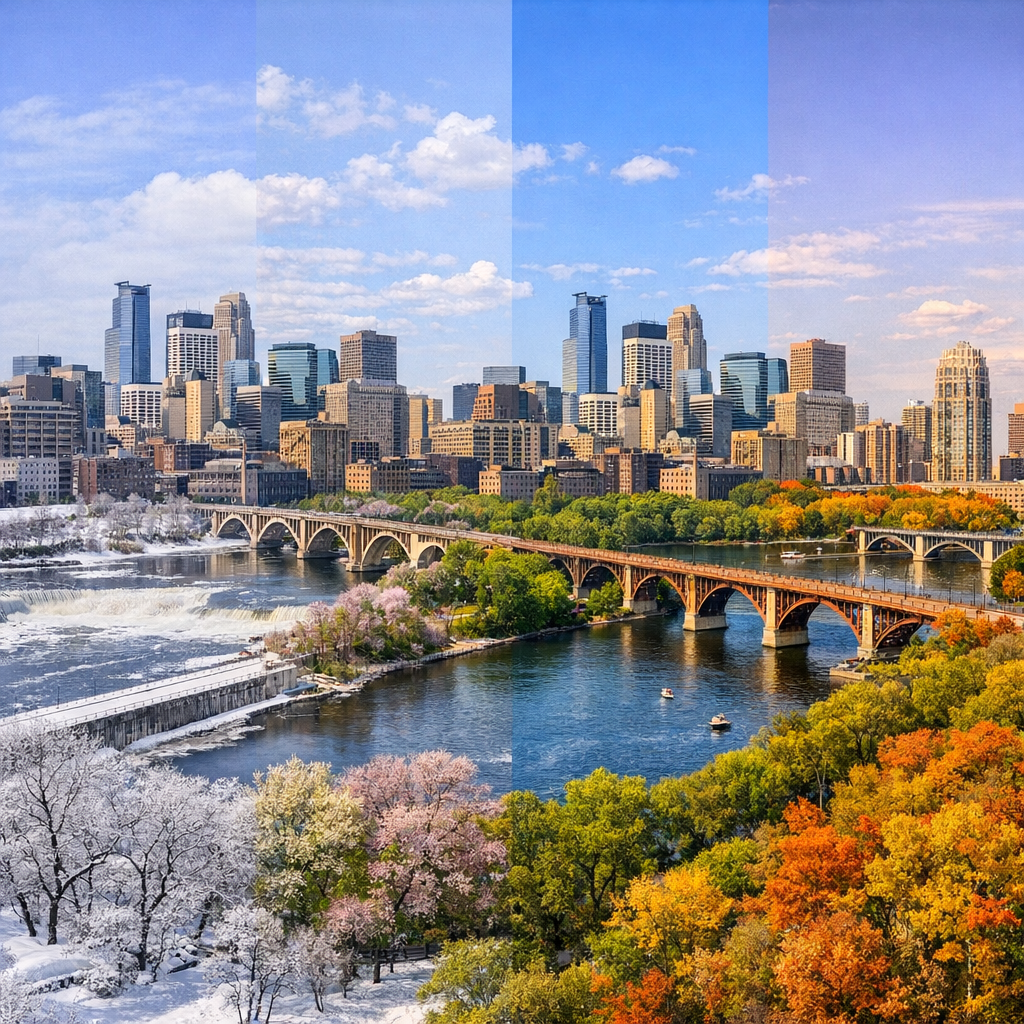
Minneapolis, known for its vibrant culture and scenic landscapes, experiences a diverse range of weather conditions throughout the year. Understanding these patterns is essential for residents and visitors alike.
Seasonal Weather Patterns
Winter (Late November – Mid-March)
Winters in Minneapolis are notably cold, with temperatures often remaining below freezing for extended periods. January stands out as the coldest month, averaging highs of 23°F (-5°C) and lows of 7°F (-14°C). Snowfall is common, contributing to the city’s picturesque winter scenery.
Spring (Mid-March – May)
Spring brings a gradual warming trend. March sees average highs around 40°F (4°C), which rise to approximately 68°F (20°C) by May. This season is characterized by melting snow and budding flora, signaling the end of winter’s grip.
Summer (June – August)
Summers are warm and humid, with July being the hottest month, averaging highs of 83°F (28°C) and lows of 63°F (17°C). This period is ideal for outdoor activities, with long daylight hours and numerous festivals.
Autumn (September – November)
Autumn features a gradual cooling, with September averaging highs of 72°F (22°C) and November dropping to around 41°F (5°C). The season is marked by vibrant fall foliage, making it a favorite for many.
Impact of Climate Change
Recent data indicates that Minneapolis is warming faster than many other U.S. cities. Since 1970, winter temperatures have increased by 5.3°F, more than twice the national average. This warming trend has led to intensified rainfall, earlier snowmelt, and disrupted ecosystems.
In response, the City of Minneapolis has implemented the Climate Equity Plan, aiming to significantly reduce climate pollution by 2030 and achieve carbon neutrality by 2050. This plan emphasizes environmental justice, waste reduction, and the promotion of renewable energy.
Understanding these evolving patterns is crucial for adapting to and mitigating the effects of climate change in our community.