

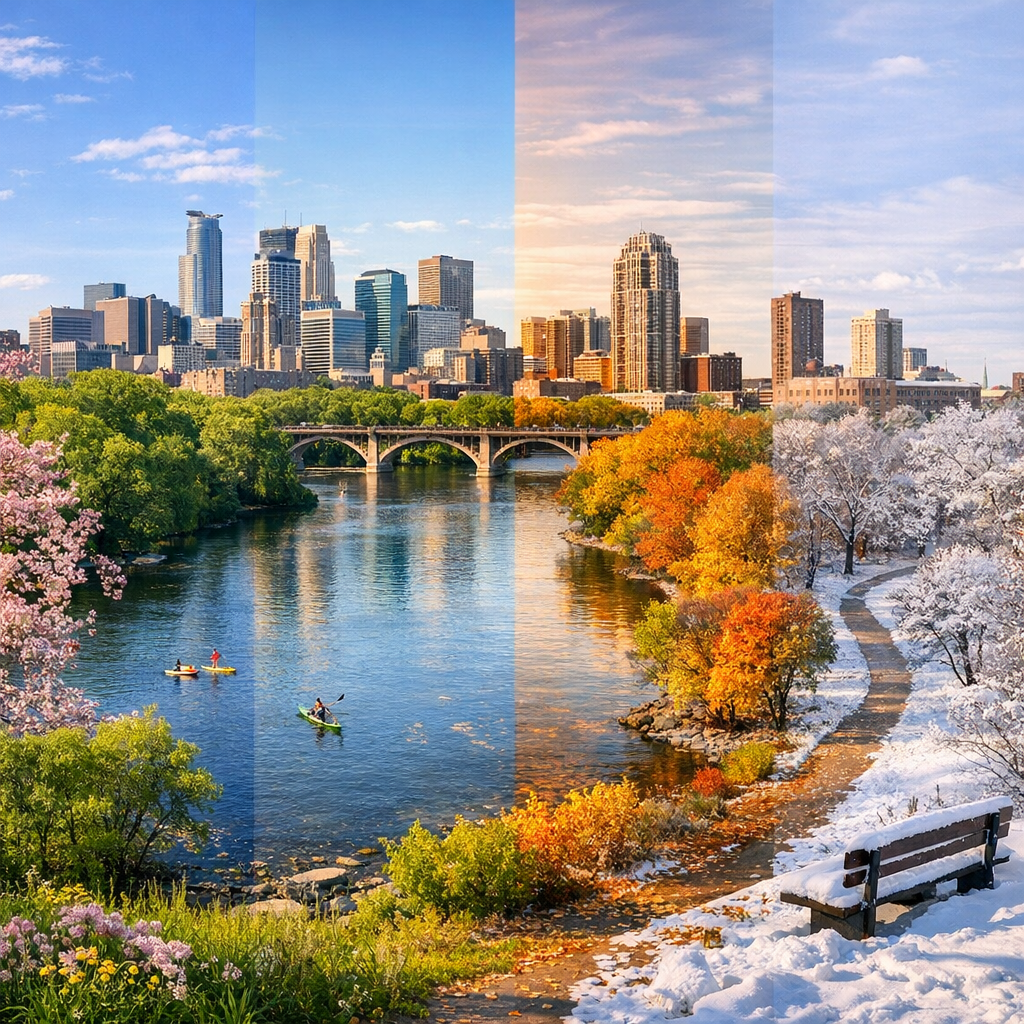
Minneapolis experiences a classic four-season climate, characterized by significant temperature variations and diverse weather conditions throughout the year. Understanding these patterns is essential for residents and visitors alike.
Winter: December to February
Winters in Minneapolis are notably cold, with average temperatures ranging from lows of 7°F (-14°C) to highs around 23°F (-5°C). Snowfall is common, contributing to the city’s picturesque winter landscape. However, residents should be prepared for occasional extreme cold snaps and heavy snowstorms.
Spring: March to May
Spring brings a gradual warming trend, with average highs increasing from 40°F (4°C) in March to 68°F (20°C) by May. This season is marked by melting snow, budding trees, and the return of outdoor activities. Rainfall becomes more frequent, supporting the growth of local flora.
Summer: June to August
Summers are warm and humid, with average highs peaking around 83°F (28°C) in July. The city enjoys long daylight hours, making it ideal for festivals, lake activities, and outdoor dining. Thunderstorms are common, occasionally bringing heavy rain and gusty winds.
Autumn: September to November
Autumn is characterized by cooler temperatures and vibrant foliage. Average highs decrease from 72°F (22°C) in September to 41°F (5°C) by November. This season is often considered the most comfortable, with crisp air and less humidity.
Impact of Climate Change
Recent studies indicate that Minneapolis is experiencing noticeable shifts due to climate change. Winters have warmed by approximately 5.3°F (2.9°C) since 1970, leading to earlier snowmelt and altered ecosystems. Additionally, the city faces increased risks of heavy rainfall events and flooding, posing challenges to infrastructure and public safety. Learn more about climate resilience in Minneapolis.
Understanding these seasonal patterns and ongoing changes is crucial for adapting to and mitigating the impacts of our evolving climate.