

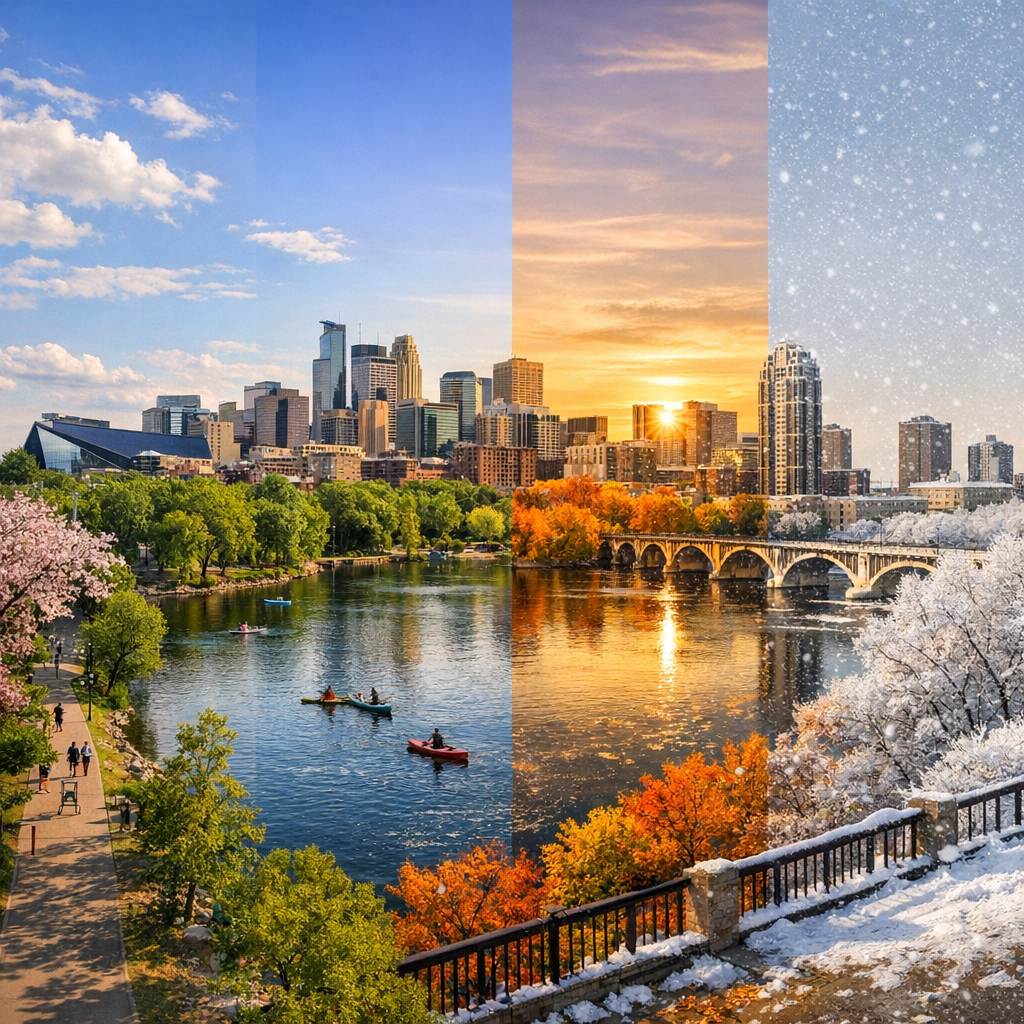
Minneapolis experiences a classic four-season climate, characterized by significant temperature variations throughout the year. Understanding these patterns is essential for residents and visitors alike.
Winter: Cold and Snowy
From late November to mid-March, Minneapolis endures cold winters. January, the coldest month, sees average highs around 23°F (-5°C) and lows near 7°F (-14°C). Snowfall is common, with annual accumulations averaging between 48 to 55 inches. Residents should prepare for icy conditions and ensure their homes and vehicles are winter-ready.
Spring: Gradual Warming
Spring brings a gradual increase in temperatures. By May, average highs reach 68°F (20°C), and lows hover around 48°F (9°C). This season often experiences unpredictable weather, including occasional late snowfalls or early heatwaves. It’s a time when the city begins to bloom, and outdoor activities become more feasible.
Summer: Warm and Humid
Summers in Minneapolis, from June to August, are warm and humid. July, the warmest month, typically has average highs of 83°F (28°C) and lows of 63°F (17°C). This season is ideal for enjoying the city’s numerous lakes and parks, though occasional heatwaves can push temperatures higher.
Autumn: Crisp and Colorful
Autumn sees a gradual cooling, with September averaging highs of 72°F (22°C) and lows of 52°F (11°C). By November, temperatures drop to average highs of 41°F (5°C) and lows of 28°F (-2°C). The fall foliage provides a picturesque backdrop, making it a favorite season for many.
Climate Change Impacts
Recent data indicates that Minneapolis is warming faster than many other U.S. cities. Since 1970, winter temperatures have increased by 5.3°F, more than twice the national average. This warming trend leads to intensified rainfall, earlier snowmelt, and disrupted ecosystems. The city has implemented a Climate Equity Plan aiming to significantly reduce climate pollution by 2030 and achieve carbon neutrality by 2050. Residents are encouraged to participate in sustainability initiatives to help mitigate these changes.
Understanding these seasonal patterns and the broader climate trends is crucial for adapting to and mitigating the impacts of our changing environment.