

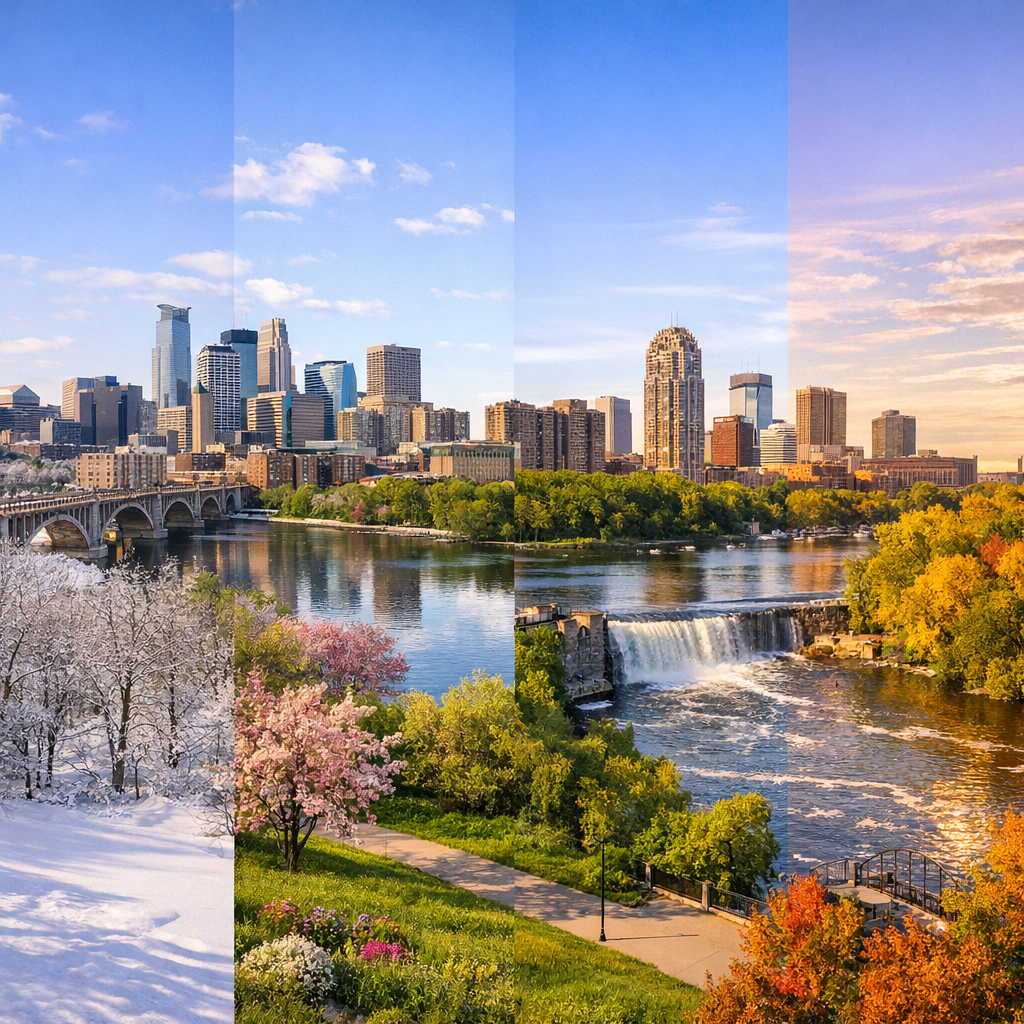
Minneapolis experiences a classic four-season climate, each bringing its own unique characteristics and challenges. Understanding these patterns is essential for residents and visitors alike.
Winter: A Frigid Wonderland
Winter in Minneapolis is notably cold, with temperatures often dropping below freezing. January stands out as the coldest month, averaging highs of 23°F (-5°C) and lows of 7°F (-14°C). Snowfall is common, contributing to the city’s picturesque winter landscape. However, residents should be prepared for icy conditions and potential snowstorms.
Spring: A Gradual Thaw
Spring brings a gradual warming trend. March sees average highs around 40°F (4°C), climbing to 68°F (20°C) by May. This season is marked by melting snow and budding flora, though occasional late snowfalls can occur.
Summer: Warm and Lively
Summers are warm and humid, with July being the hottest month, averaging highs of 83°F (28°C) and lows of 65°F (18°C). This season is ideal for outdoor activities, with long daylight hours and numerous festivals celebrating the warmth.
Autumn: A Colorful Transition
Autumn offers a crisp and colorful transition, with September averaging highs of 72°F (22°C) and lows of 52°F (11°C). The fall foliage provides a stunning backdrop, making it a favorite season for many.
Climate Change: A Growing Concern
Recent data indicates that Minneapolis is warming faster than many other U.S. cities. Since 1970, winter temperatures have increased by 5.3°F, more than twice the national average. This warming trend leads to intensified rainfall, earlier snowmelt, and disrupted ecosystems. The city has recognized these challenges and is actively working on climate action plans to mitigate these effects and promote sustainability.
Understanding these seasonal patterns and the impacts of climate change is crucial for adapting to our evolving environment and ensuring a resilient Minneapolis for future generations.