

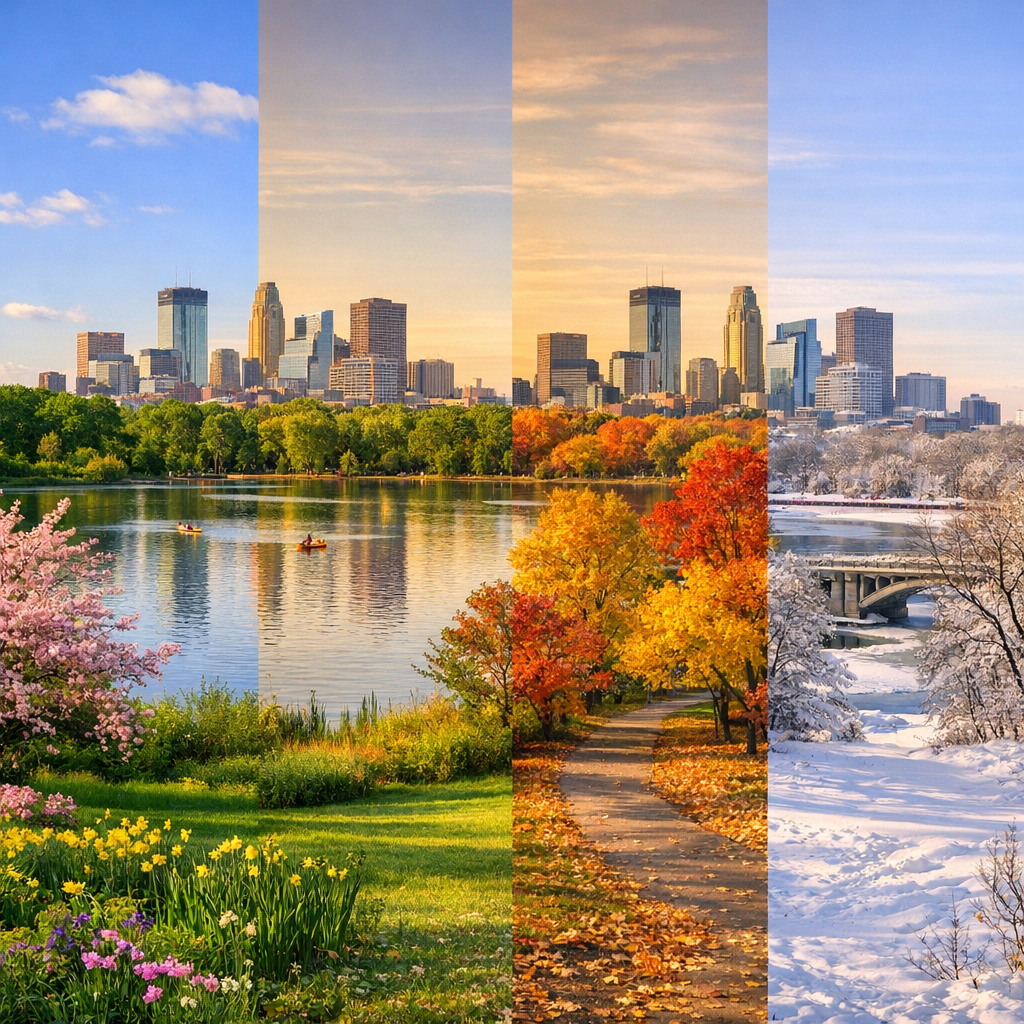
Minneapolis experiences a classic four-season climate, characterized by significant temperature variations and diverse weather conditions throughout the year. Understanding these patterns is essential for residents and visitors alike.
Winter: Late November to Mid-March
Winters in Minneapolis are notably cold and snowy. January, the coldest month, sees average highs around 23°F (-5°C) and lows near 7°F (-14°C). Arctic air masses can push temperatures well below 0°F (-18°C), accompanied by biting winds that create dangerous wind chill factors. Snowfall is common, with annual accumulations averaging between 48 to 55 inches.
Spring: Mid-March to May
Spring brings a gradual warming trend. March starts with average highs of 40°F (4°C), reaching up to 68°F (20°C) by May. This season is marked by melting snow and budding flora, though weather can be unpredictable with occasional late snowfalls or early heatwaves.
Summer: June to Mid-September
Summers are warm and humid. July, the warmest month, typically has average highs of 83°F (28°C) and lows around 63°F (17°C). Thunderstorms are common, contributing to the season’s higher precipitation levels.
Autumn: Mid-September to November
Autumn features cooler temperatures and vibrant foliage. September starts with average highs of 72°F (22°C), dropping to 41°F (5°C) by November. This season is generally dry, providing comfortable conditions for outdoor activities.
Impact of Climate Change
Recent data indicates that Minnesota’s climate is becoming warmer and wetter. Average temperatures have risen by nearly 3°F, and extreme heat events are on the rise. These changes pose challenges such as increased flooding, heat-related health risks, and impacts on agriculture.
In response, the City of Minneapolis has adopted the Climate Equity Plan, aiming to significantly reduce climate pollution by 2030 and achieve carbon neutrality by 2050. This plan emphasizes environmental justice and resilience, particularly for communities most vulnerable to climate impacts.
Understanding these seasonal patterns and ongoing climatic changes is crucial for adapting to and mitigating the effects of climate change in our community.