

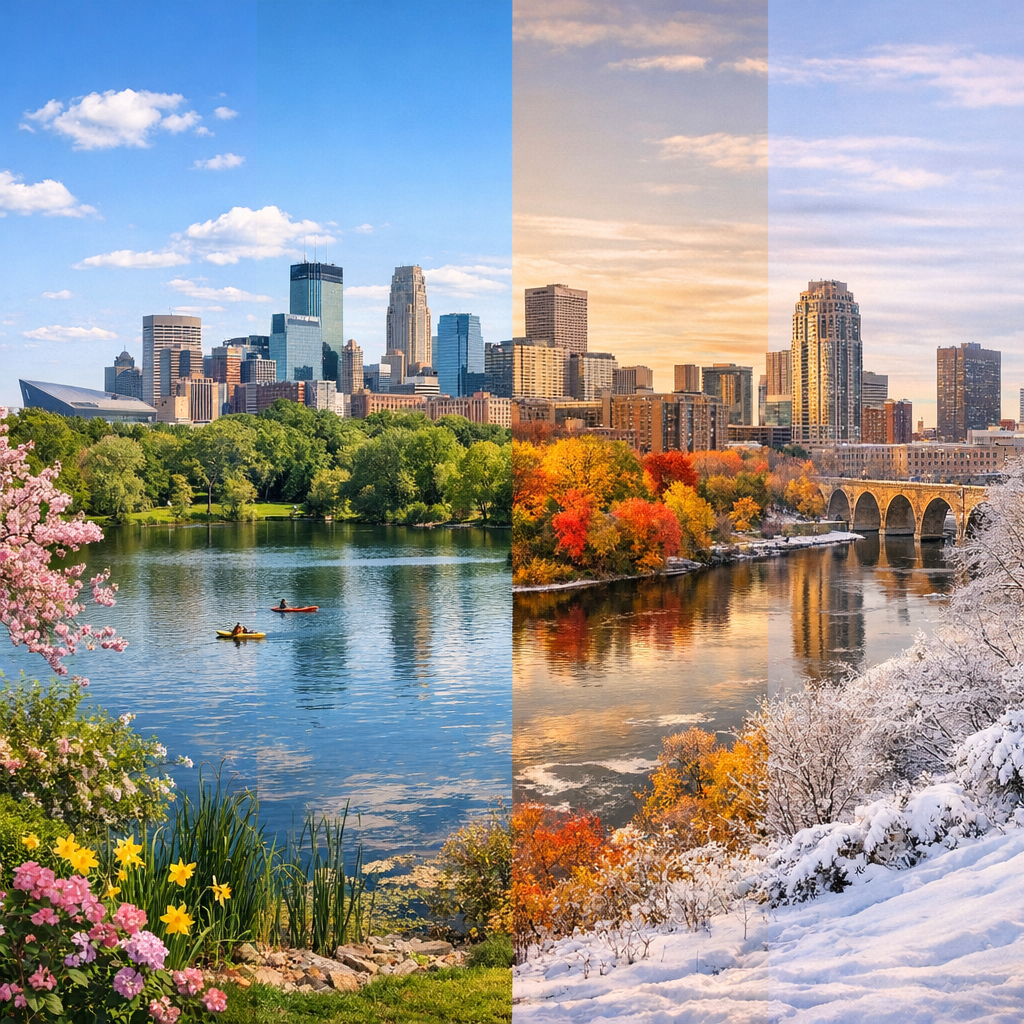
Minneapolis, known for its vibrant culture and scenic landscapes, experiences a diverse range of weather conditions throughout the year. Understanding these patterns is essential for residents and visitors alike.
Winter: A Frosty Embrace
From late November to mid-March, Minneapolis undergoes its coldest period. January stands out as the chilliest month, with average highs around 23°F (-5°C) and lows dipping to 7°F (-14°C). Snowfall is abundant, averaging between 48 to 55 inches annually. Residents often face sub-zero temperatures, making winter sports and indoor activities popular during this season.
Spring: A Gradual Thaw
Spring brings a welcome change as temperatures rise from March through May. By May, average highs reach 68°F (20°C), and lows hover around 48°F (9°C). This season is marked by blooming flora and increased rainfall, setting the stage for the lush greenery of summer.
Summer: Warm and Lively
June through August sees Minneapolis at its warmest. July, the hottest month, boasts average highs of 83°F (28°C) and lows of 63°F (17°C). The city comes alive with festivals, outdoor concerts, and recreational activities, taking advantage of the pleasant weather.
Autumn: A Colorful Transition
September to November offers a crisp and colorful atmosphere. Temperatures gradually decrease, with November averaging highs of 41°F (5°C) and lows of 28°F (-2°C). The fall foliage provides a picturesque backdrop, making it a favorite season for many.
Climate Change: A Growing Concern
Recent data indicates that Minneapolis is warming faster than many other U.S. cities. Since 1970, winter temperatures have increased by 5.3°F, more than twice the national average. This warming trend has led to intensified rainfall, earlier snowmelt, and disrupted ecosystems. The city has recognized these challenges and is actively working on climate action plans to mitigate the impacts and build resilience.
Understanding these seasonal patterns and the broader climatic shifts is crucial for planning daily activities and long-term strategies to address environmental changes in Minneapolis.