

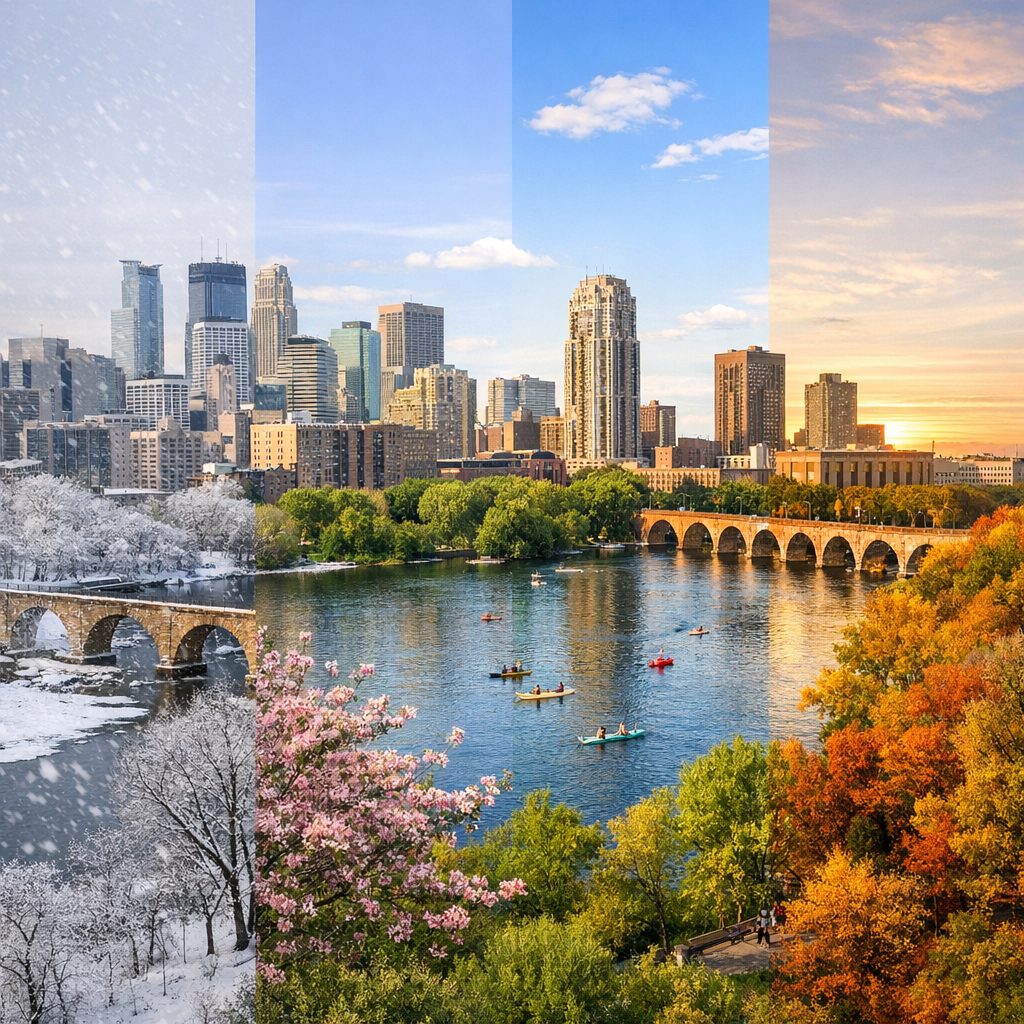
Minneapolis experiences a classic four-season climate, each bringing its own unique weather patterns and challenges. Understanding these seasonal shifts is essential for residents and visitors alike.
Winter: December to February
Winters in Minneapolis are notably cold and snowy. Average high temperatures hover around 23°F (-5°C) in January, with lows dipping to 7°F (-14°C). Snowfall is common, contributing to the city’s winter landscape. Residents should prepare for icy conditions and ensure their homes and vehicles are winter-ready.
Spring: March to May
Spring brings a gradual warming trend. March sees average highs of 40°F (4°C), increasing to 68°F (20°C) by May. This season is characterized by melting snow and budding flora, though occasional late snowfalls can occur. It’s a time of renewal, but also of unpredictable weather shifts.
Summer: June to August
Summers are warm and humid, with July being the hottest month, averaging highs of 83°F (28°C). Thunderstorms are frequent, often bringing heavy rainfall. These months are ideal for outdoor activities, but it’s wise to stay updated on weather forecasts due to the potential for severe storms.
Autumn: September to November
Autumn offers a respite with cooler temperatures and vibrant foliage. September starts with average highs of 72°F (22°C), dropping to 41°F (5°C) by November. This season is generally dry, making it perfect for enjoying the outdoors before winter sets in.
Impact of Climate Change
Recent data indicates that Minneapolis is experiencing warmer and wetter conditions due to climate change. This trend affects various aspects of city life, from agriculture to infrastructure. The city has implemented the Climate Equity Plan, aiming to significantly reduce climate pollution by 2030 and achieve carbon neutrality by 2050. This plan emphasizes environmental justice and aims to create a healthier, more prosperous future for all residents. Learn more about the Climate Equity Plan.
Understanding these seasonal patterns and the broader climatic changes is crucial for adapting to and mitigating the impacts of our evolving environment.